As manufacturer specialized in manufacturing of Antimony trioxide and Non-Halogen Flame Retardant,Since 2000, JIEFU have pioneered the manufacturing of flame retardant masterbatches in China.JIEFU initiated from custom flame retardant compounding of all commodity and engineering plastics to technologically sound production of fiame retardant masterbatches under the brand name JIEFU masterbatches.

Showing posts with label BC-58. Show all posts

Saturday, September 15, 2007

Flame retardant polyolefin pallets and flame retardant master batch for their production

JIEFU antimony trioxide
Polyolefin-based pallets capable of passing standard pallet flammability tests are prepared by molding the pallet or one or more subassemblies thereof, of a polyolefin molding resin containing a flame retardant package containing a halogenated organic flame retardant, alumina trihydrate, and antimony trioxide. The flame retardants are advantageously supplied as a master batch at a concentration higher than that desired in the pallet or subassembly, in a polyolefin-compatible polymer.


Claims

What is claimed is:

1. A flame retardant molded polyolefin pallet comprising one or more subassemblies, at least one subassembly comprising a polyolefin containing a flame retardant package comprising as flame retardant components

a) 4-14% halogenated organic flame retardant,

b) 4-15% alumina trihydrate, and

c) 1-5% antimony trioxide, said percentages based on the weight of polyolefin and the sum of flame retardant components a) to c).

2. The pallet of claim 1 wherein the flame retardant components comprise

a) 7-12% halogenated organic flame retardant;

b) 8-12% alumina trihydrate;

c) 2-4% antimony trioxide; and

said percentages based on the weight of polyolefin and the sum of flame retardant components a) to c).

3. The pallet of claim 1, wherein subassemblies which comprise the most flammable portions of said pallet contain said flame retardant components.

4. The pallet of claim 1, wherein all of said subassemblies contain said flame retardant components.

5. The pallet of claim 1, wherein said polyolefin comprises polypropylene.

6. The pallet of claim 1, wherein said one or more subassemblies containing said fire retardant components further comprise a filler, fibrous reinforcement, or both filler and fibrous reinforcement.

7. The pallet of claim 1, further comprising one or more auxiliary flame retardants.

8. The pallet of claim 1, wherein said halogenated flame retardant comprises tetrabromobisphenol A.

9. A process for the manufacture of a flame retardant polyolefin pallet or subassembly thereof, comprising

a) supplying a polyolefin molding resin

b) supplying a flame retardant package comprising flame retardant components

b)i) from 4-14% halogenated organic flame retardant;

b)ii) from 4-15% alumina trihydrate;

b)iii) from 1-5% antimony trioxide;

c) uniformly blending said polyolefin resin with the components b)i to b)iii of said flame retardant package to form a flame retardant-containing polyolefin molding resin; and

d) molding a polyolefin pallet or subassembly thereof from said flame retardant-containing polyolefin molding resin.

10. The process of claim 9, wherein said flame retardant components are supplied in a master batch of a polyolefin compatible polymer resin containing said flame retardant components in an amount higher than the amount desired in said pallet or subassembly thereof, and supplying sufficient polyolefin to reduce the level of said flame retardant components to the range of 4-14% a), 4-15% b), and 1-5% c).

11. The process of claim 9, wherein said pallet comprises at least a top deck and a bottom deck, optionally having a plurality of columns between said top deck and said bottom deck, at least one of said top deck, said bottom deck, or said columns being molded from a polymer of different flammability characteristics than another of said top deck, bottom deck, or columns.

12. The process of claim 11, comprising molding said top deck of said flame retardant-containing polyolefin molding resin.

13. The process of claim 11, further comprising constructing said top deck or a portion thereof of a non-polyolefin polymer which exhibits greater inherent flammability resistant characteristics than polyolefin.

14. The process of claim 9, wherein said polyolefin comprises polypropylene.

15. The process of claim 9, wherein said polyolefin pallet or subassembly thereof further contains a filler, fibrous reinforcement, or a mixture thereof.

16. A flame retardant polymer master batch suitable for addition to a polyolefin molding resin to prepare the pallet or subassembly thereof of claim 1, said master batch comprising 20 weight percent or more halogenated organic flame retardant, 20 weight percent or more of alumina trihydrate; 6 weight percent or more of antimony trioxide, and at least 10 weight percent of a polymer which is compatible with polyolefin in injection molding.

17. The master batch of claim 16, comprising 20 to 25% halogenated flame retardant, 20 to 40% alumina trihydrate, 6 to 15% antimony trioxide, and minimally 10% polyolefin-compatible polymer, said percentages being based on the total weight of the master batch.

18. The master batch of claim 16, comprising 25-35% halogenated organic flame retardant, 25-40% alumina trihydrate, and 8-12% antimony trioxide, balance polyolefin.

19. The master batch of claim 16 wherein said polyolefin comprises polypropylene.

20. The master batch of claim 16, wherein said halogenated organic flame retardant comprises tetrabromobisphenol A.

Description

BACKGROUND OF THE INVENTION

1. Field of the Invention

The present invention pertains to flame retardant shipping pallets of polyolefin plastic.

2. Background Art

In the past, shipping pallets were made largely of wood. More recently, numerous materials have at least partially superseded wood-based pallets. For example, pallets of injection molded polymers are being used increasingly. Such polymer pallets have numerous advantages. For example, polymer pallets are capable of being molded in complex shapes which facilitate the shipping of numerous types of articles. Polymer pallets are also easy to clean, which encourages their reuse.

Wood pallets are inherently combustible, and are rather easily ignited. While polymer articles are in general somewhat more difficult to ignite, once ignited they also constitute combustible products, and pound for pound have more potential energy than wood articles. In the shipping industry, empty pallets are often stacked together for reuse or for return to the shipper ("idle storage"). When wood pallets are so stacked and ignited, the fire is generally concentrated in an upward direction. However, when polymer pallets burn, in addition to having greater potential energy (combustibility), the flame can also spread downward by dripping. Thus, the combustion of polymer pallets involves more heat and more potential energy, a combustion mechanism not found in wood pallets. Thus, it is desirable to minimize the combustibility and heat release, and in turn lower the flame spread of polymer based pallets.

One solution which has been proposed is to produce pallets of polymers which are less flammable than pallets of commodity resins, such as polyolefins. However, such speciality polymers, e.g. polyphenylene oxide polymers, are considerably more expensive than the polyolefin polymers conventionally used to manufacture pallets. Such specialty polymers are also, in general, much more difficult to mold than polyolefins.

A standard test for pallet flammability has been established by Underwriters Laboratories, as UL 2335 "Fire Tests of Storage Pallets," referred to, for example, in WO 00/20495. In one version of this test, the "Idle Pallet Test," six stacks of pallets are assembled in a 2×3 array with a 6" longitudinal flue space longitudinally between arrays in a room with a 30 foot high flat ceiling having 165° F. (74° C.) standard response sprinklers having a design density of 0.60 gpm/ft2. An instrumented steel beam is placed near the ceiling, and the pallets are ignited by hydrocarbon soaked cellulosic bundle positioned in the flue space. The parameters assessed include flame spread, maximum steel beam temperature, and number of sprinklers activated. As can be seen, this test is a rather stringent one.

In a second version of the test, the so-called "Commodity Storage Test," a 2×2×2 array 1 of pallets 5, each carrying a Class II commodity carton 2, are placed 25 feet (7.5 m) below a 10 M watt heat release calorimeter 3 and ignited by four igniters in the center flue space, each igniter comprising a 3 inch (12.5 cm) cellulosic bundle soaked with 4 oz. (112 g) heptane in a polyethylene bag. Overhead sprinklers 4 at a height of 10 feet (3 m) are activated electromechanically when the instrumentation indicates that a sprinkler activation temperature of 286° F. (141° C.) has been reached. A series of three tests is made, with water application rates of 0.11, 0.21, and 0.31 gpm/ft2. In each test, four parameters are noted: maximum one minute mean total heat release rate; maximum one minute mean convective heat release rate; effective convective heat release rate, defined as the average convective heat release rate measured over five minutes of the most intense fire; and convective energy, the average convective heat release rate measured over the 10 minutes of most severe burning.

Although numerous flame retardants and combinations thereof are known for use in plastic articles, the stringent tests required of pallets render flame retardancy results unpredictable. Numerous flame retardants and combinations have been tested, and while many of these have been found suitable for polyolefin articles other than pallets, their use in pallets has not proven acceptable.

WO 00/20495 discloses pallets prepared from specialty resins such as polyphenylene ether resins, polycarbonate resins, vinyl aromatic graft copolymer resins, and polyetherimide resins further including arylphosphate esters and zinc chalcogenides. In U.S. Pat. No. 4,727,102, "self extinguishing" polyolefins are disclosed containing major amounts of ammonium polyphosphate, tris(2-hydroxyethyl)isocyanurate, and melamine cyanurate. However, the large amounts of additives (40%) severely compromise the properties of products prepared from the polyolefin resin.

It would be desirable to provide a polyolefin composition suitable for use in molding pallets which is injection moldable, exhibits good flame retardance in standard tests, and which is commercially cost effective. However, until now, tests of flame retardant systems for use in polyolefin polymer pallets did not result in satisfactory performance.

SUMMARY OF THE INVENTION

It has now been surprisingly discovered that polyolefin-based plastic pallets can be manufactured which satisfactorily pass standard pallet flammability tests, when the polyolefin is compounded with a fire retardant package comprising minimally a halogenated flame retardant, alumina trihydrate, and antimony trioxide. The flame retardant ingredients are preferably supplied as a master batch and incorporated into conventional polyolefin molding resins prior to injection molding.

BRIEF DESCRIPTION OF THE DRAWINGS

FIG. 1 illustrates a typical Commodity Storage Test setup to assess flammability characteristics of pallets;

FIG. 2 illustrates the average steel beam temperature in an Idle Storage Test of flame retardant polymer pallets of the subject invention and similar sized softwood pallets.

DETAILED DESCRIPTION OF THE PREFERRED EMBODIMENTS

The polymer pallets of the present invention may take numerous forms. It has been found convenient to mold pallets in several subassemblies and assemble the pallets together by snap fittings, fusion or adhesive bonding, or by a variety of such assembly techniques. In this manner, non-load bearing areas may be made of thinner section, thus minimizing raw material usage. Moreover, use of a plurality of subassemblies allows pallets of more complex shape to be produced.

The polymer of which the pallets of the subject invention are constructed is polyolefin, although it is not necessary to form all parts of these polymers. Pallet portions which contribute more to ease of flammability or flame spread may be made of other polymers which are less flammable than polyolefin or which tend to melt and/or drip less than polyolefin. A pallet construction which employs portions of different flammabilities which takes advantage of these characteristics is disclosed in commonly assigned U.S. application Ser. No. 10/040,098, filed Oct. 19, 2001, incorporated herein by reference.

The polyolefin polymers may be, for example, but not by way of limitation, polyethylene, polypropylene, or polybutylene. In general, the polyolefin polymers are copolymers, for example copolymers of ethylene with propylene, 1-butene, 1-hexene, 1-octene, or mixtures thereof, or copolymers of propylene with ethylene, 1-butene, 1-hexene, 1-octene or mixtures thereof. Homo and copolymers of propylene are preferred. Different polyolefin polymers may be used for various subassemblies. Polymer blends of polyolefins with other compatible thermoplastics or with elastomeric tougheners such as elastomeric polymers of styrene, butadiene, alkyl acrylates, and the like are also useful. When such tougheners are used, they are generally present in the form of relatively small particles, or as interpenetrating polymer networks, as is well known in the art of toughened thermoplastics.

The polyolefin polymers may also be reinforced or filled. Suitable fillers include typical reinforcing and non-reinforcing fillers such as precipitated and fumed silicas, ground quartz, diatomaceous earth, ground limestone, ground dolomite, ground felspar, mica, expanded mica, precipitated calcium carbonate, etc. The term "reinforcing" with respect to fillers generally refers to fillers of small size and high surface area, for example mean particle sizes <1 µm and specific surface areas (BET) of 50 m2 /g or higher. Suitable fibrous fillers are typically short or long glass fibers. Other fibrous reinforcement such as aramid fiber, carbon fiber, boron nitride fiber, etc., may also be used, however such materials are generally more expensive than glass fibers. Some subassemblies may be filled or may contain fibrous reinforcement whereas other subassemblies may not, or may contain differing reinforcement and/or fillers. Use of continuous fiber reinforcement is also possible in some cases, particularly when polyolefin-based GMT intermediate products are used for molding, or when resin transfer molding and similar techniques are used.

The pallet or at least one of its component subassemblies must contain a flame retardant "FR" package in accordance with the subject invention. The subject invention FR package includes, in percent by weight relative to the total weight of polyolefin and FR package, from 4 to 14% halogenated organic flame retardant, preferably 7 to 12%, and more preferably 8 to 11%; from 4-15%, more preferably 8 to 12% and most preferably 9-11% alumina trihydrate; and 1-5%, more preferably 2 to 4% and most preferably about 3% antimony trioxide (Sb2 O3), these percentages being weight percents based on the weight of polymer and flame retardants. In particular, an FR package containing 8-10% halogenated organic flame retardant, 9-10% alumina trihydrate, and 3% antimony trioxide is used.

The halogenated organic flame retardant includes polyhalogenated organic compounds such as polybrominated biphenyl oxides, halogenated phosphate esters such as tris(2-chloroethyl)phosphate and the like. However, the most preferred halogenated organic flame retardants comprise tetrabromobisphenol A ("TBBA") or admixtures of the latter with other halogenated organic flame retardants. Most preferably TBBA is present in an amount of 50% by weight or more relative to the total halogenated organic flame retardant.

The flame retardant ingredients, when solid, are supplied in pulverulent form, and may be incorporated into the polyolefin by conventional techniques, i.e. in mixers or blenders, but preferably in an extruder. It has been found that preparation of a master batch of the same or different polyolefin or other polyolefin compatible polymer, and containing approximately 2 to 5 times, preferably 2.5 to 4 times the final FR weight percentage is particularly useful. For example, a master batch containing about 30 weight percent organic flame retardant, 32 weight percent alumina trihydrate, and 10% antimony trioxide, balance polypropylene polymer, is highly useful. The master batch is then blended or "diluted" with additional polymer in an extruder prior to injection molding. By "extruder" is meant a screw-type device used to blend thermoplastics to form extrudates or to supply molten thermoplastic to an injection molding machine. The term should not be viewed as limiting, and other mixers may in principle be used.

By the term "polyolefin compatible" or simply "compatible" is meant a polymer which can be blended with polyolefin molding resin and molded into a polyolefin pallet or subassembly thereof while maintaining sufficient strength properties. The compatible polymer may phase separate to form small polymer particles or an interpenetrating polymer network, or may be miscible with the polyolefin. It is preferred that the compatible polymer be itself a polyolefin, particularly the same polyolefin or a polyolefin similar in composition to the polyolefin molding resin. For example, when polypropylene homopolymers or copolymers are used as the polyolefin molding resin, it is preferred that a polypropylene polymer be the polyolefin-compatible polymer of the flame retardant master batch.

The FR package of the present invention may also be used with auxiliary flame agents. Examples include nitrogenous organic compounds such as urea, melamine, and formaldehyde condensates thereof, in the form of powders, prills, fibers, etc., intumescents such as sugars and starches; carbon dioxide generators such as the various metal carbonates, and water generators such as hydrated metal salts. This list is exemplary, and not limiting.

Thus, in preferred embodiments, the pallets of the subject invention are molded of a plurality of subassemblies, which are then joined together, preferably by fusion bonding. In this manner, the composition of the various subassemblies may be varied to optimize pallet physical properties as well as flame retardant properties. For example, one or more of the subassemblies may contain a filler, fibrous reinforcement, or both. Likewise, as indicated previously, those subassemblies which contribute most to flammability may be more highly filled and may also contain higher levels of flame retardant. This is particularly true of the top deck of the pallet. Preferably, all subassemblies contain flame retardant, however.

Preferred pallets have a top deck, a bottom deck, and most preferably a plurality of columns between the top and bottom decks. At least the top deck and preferably all subassemblies are molded from polyolefin resin to which has been added a flame retardant master batch comprising 20 weight percent or more, preferably 20 to 25 weight percent, and most preferably 25 to 35 weight percent of one or more halogenated flame retardant(s); 20 weight percent or more, preferably 20 to 40 weight percent, and more preferably 25 to 40 weight percent alumina trihydrate; and 6 weight percent or more, preferably 6 to 15 weight percent, and more preferably 8 to 12 weight percent of antimony trioxide, at least 10% by weight of the master batch being an olefin compatible polymer.

Having generally described this invention, a further understanding can be obtained by reference to certain specific examples which are provided herein for purposes of illustration only and are not intended to be limiting unless otherwise specified.

EXAMPLE 1 AND COMPARATIVE EXAMPLE C1

Pallets were manufactured by injection molding of subassemblies from polypropylene resin. The subassemblies were assembled into completed pallets and joined together by fusion bonding. The pallet of Example 1 included the FR package of the present invention, added as a master batch containing 30% FR-720 halogenated organic flame retardant, 32% alumina trihydrate, and 10% antimony trioxide, remainder polypropylene. The master batch was added to the extruder with polypropylene resin such that the final polymer of the Example 1 pallet contained 9% FR-720 halogenated organic flame retardant, 9.6% alumina trihydrate, and 3% antimony trioxide. The comparative Example C1 contained no FR package.

Pallet Example
1 C1
Idle Storage Test pass fail
Commodity Storage Test pass fail


EXAMPLE 2 AND COMPARATIVE EXAMPLE C2

An Idle Storage Test as previously described was conducted in stacked 48×40 two-piece construction polymer pallets (polypropylene) which include the FR composition of the subject invention (Example 2). The average steel beam temperatures were plotted against time for these subject invention pallets and standard 48×40 softwood pallets. The results were presented graphically in FIG. 2. The subject invention pallets produced considerably lower temperatures 10 than the wood pallets 11, and pass the Idle Storage Test. Polyolefin pallets containing no FR package exhibit higher temperatures than do the softwood pallets, and do not pass the test. The horizontal line 12 represents the pass/fail limit.

The results indicate that the flame retardant package of the subject invention is suitable for use in pallets, where unique flame retardant properties are required. The subject invention pallet Example 1 was able to pass both Underwriters Laboratory pallet tests, while a similar pallet of the same base molding resin did not. Likewise, the Example 2 pallet shows considerable improvement over wood pallet flammability.

While embodiments of the invention have been illustrated and described, it is not intended that these embodiments illustrate and describe all possible forms of the invention. Rather, the words used in the specification are words of description rather than limitation, and it is understood that various changes may be made without departing from the spirit and scope of the invention.

* * * * *
Other References

* "Intumescents: Coating Contains Dual Components," Flame Retardancy News, vol. 11; Issue 7, Jul. 1, 2001.
* Renstrom, R., "Clean Rooms Getting Cleaner," Plastics News, vol. 13, N. 30, Sep. 24, 2001.
* "Prototype Production will Utilize Breakthrough Thermoplastic Flow Forming Technology to Achieve Superior Performance and Economic Results," Las Vegas Business Wire, Jul. 23, 2001.
* English Abstract corresponding to JP 11278485 A.
* Underwriters Laboratories, Inc. "UL 2335 Performance Testing".


We can supply any quantity and any kind of Antimony products from stock.would you please inform us how many you need and your target price, then we will confirm ASAP. We are sincerely hope to do business with you and establish long term business relationship with your respectable company.

Look forward to hearing from you soon.

Best regards,

Sam Xu
Contact me:
MSN: xubiao_1996@hotmail.com
GMAIL: samjiefu@gmail.com
SKPYE:jiefu1996


flame retardant masterbatches


...
Read more...

Thursday, August 16, 2007

BC-58

JIEFU antimony trioxide
BC-58 is a brominated aromatic flame retardant for thermoplastic resin systems. BC-58, a white powder, offers excellent thermal stability, good UV stability and color in the final part.

Flame retarding resin compositions having good thermal stability and good impact resistance. The composition comprises a thermoplastic resin selected from the group of polycarbonate, polybutylene terephthalate, polyethylene terephthalate, and blends and alloys of polycarbonate with polybutylene terephthalate, polyethylene terephthalate and acrylonitrile-butadiene-styrene, and a flame retarding amount of a melt-blendable, solid polybrominated triphenyl phosphate ester selected from tris(dibromophenyl)phoshate and bis(tribromophenyl)phenylphosphate, and less than 5% antimony oxide or halogenated organic

Thermoplastic resins can be modified by a number of additives which act as flame retardants to hinder ignition or reduce flame spread. These flame retardants frequently must be employed in large quantities and processed at elevated temperatures, resulting in the degradation of the properties of thermoplastic polymers. Some flame retardants are difficult to disperse and to process into the resin, particularly the polymeric additives.

Chlorinated flame retardant additives such as chlorinated paraffins are frequently used, primarily because of their low cost. However, the chlorinated flame retardants generally have poor thermal stability. Chlorinated flame retardants with good thermal stability are frequently high cost additives. Thermoplastics using them often require the use of up to 15% by weight antimony oxide as a synergist.

Antimony oxide has severe limitations when used as a halogen synergist in thermoplastics. The use of high concentrations of antimony oxide in thermoplastics frequently leads to "after-glow" after flame extinguishment. The fine powder dusts readily during handling. It is recommended that breathing the dust be avoided. Antimony oxide has caused lung tumors in laboratory inhalation studies with animals. Further, in polyethylene terephthalate, polybutylene terephthalate and polycarbonate resins, antimony oxide acts as a depolymerization catalyst.

Generally, between 3 and 8% w/w antimony oxide is used as a halogen synergist in thermoplastics. In polypropylene up to 15% w/w antimony oxide is sometimes necessary for optimum flame retardancy. It has been found that oxide substantially degrades the physical properties of engineering thermoplastics, for example, the impact resistance. In addition, high loadings of the white antimony oxide make it impossible to make a product with deep rich colors.

Bromine compounds are known to be about twice as effective a flame retardant as chlorine compounds. Bromoparaffins are limited in their use to polyvinylchloride and polyurethane foam because of their poor heat stability. However, brominated aromatics have emerged to fill the needs of more specialized thermoplastic polymers. Examples are poly(tribromostyrene) which is marketed under the tradename Pyrochek 68 PB by Ferro Corporation, poly(dibromophenylene oxide), bis(tetrabromophthalimido)ethane, decabromodiphenyl oxide, bis(tribromophenoxy)ethane and brominated polycarbonate oligomers which are marketed under the tradenames BC-58 and BC-52 by Great Lakes Chemical. These flame retardants offer improved thermal stability and chemical resistance over the brominated paraffins. However, each of these compounds is limited in its cost effective application to special resin compositions as a result of their effect on physical properties, toxicity of brominated furans and processability. Also, in some applications over 5% w/w antimony oxide must be used to attain excellent flame retarding qualities.

Phosphorus compounds such as phosphate esters, with or without halogen are also used as flame retardant additives. Typical compounds are the alkyl, alkaryl and triaryl phosphates used as plasticizers in PVC, and the halogenated alkylphosphates and phosphonates used in urethane foams, phenolics, acrylics and epoxies. Low thermal stability, volatility and the tendency to plasticize limit the use of these additives. Phosphorus compounds are about three times more effective than bromine compounds.

U.S. Pat. Nos. 3,912,792 and 4,021,406 to Touval teach a three-part flame retarding composition for organic polymers consisting of from 0.5% to 20% of a tris(halophenyl)phosphate based on the combined weight of one to twelve parts by weight of a halogen-containing organic having a volatization temperature of more than 200.degree. C. and one part by weight antimony oxide. When the polymer is other than polypropylene, the flame retarding composition must also contain sulfur. The Examples and Table I in the patents teach that there must be at least 17 parts by weight antimony oxide per 5 parts by weight tris(halophenyl)phosphate to provide flame retardancy (together with 50 parts by weight halogen-containing organic).

Further, the patent teaches that tris(2,4,6-tribromophenyl)phosphate does not significantly reduce the flammability of polypropylene at the relatively low concentrations employed unless both antimony oxide and halogen-containing organic compound are present.

SUMMARY OF THE INVENTION

The present invention provides flame retardant engineering thermoplastic compositions comprising a) a resin selected from the group consisting of polycarbonate, polybutylene terephthalate, polyethylene terephthalate, and blends and alloys of polycarbonate with polybutylene terephthalate, polyethylene terephthalate and acrylonitrile-butadiene-styrene (ABS), and b) a flame retarding amount of a melt-blendable solid polybrominated triphenyl phosphate ester, the ester having a molar ratio of bromine to phosphorus of 6:1. The resulting thermoplastic composition is thermally stable, is not subject to plateout, has good impact properties, and good processability. Optionally, the compositions contain less than 5% by weight either antimony oxide supplied as sodium antimonate or as antimony oxide or additional halogenated organic compound taught by the prior art.

DETAILED DESCRIPTION

It is desirable that each phenyl radical contains either two or three bromine atoms. For example, if the ester is to be manufactured by the reaction of brominated phenols and phosphorus oxychloride, the phenols are primarily either 2,4-dibromophenol, or 2,4,6-tribromophenol. Preferably, the ester will be either tris(2,4-dibromophenyl)phosphate or a bis(tribromophenyl)phenyl phosphate such as bis(2,4,6-tribromophenyl)phenyl phosphate. A product produced from a mixture of esters usually is a liquid and is not desirable.

Until now most brominated flame retardants used in engineering thermoplastics were either oligomers or polymers. As a result, they had poor processability, that is, they were difficult to compound into an engineering thermoplastic resin, and the processability of the compounded formulation was poor as measured by spiral flow and melt index. As a result, injection molding was difficult, requiring higher temperatures and higher pressures resulting in an increased processing cost and an increased reject rate and often resulting in discoloration. The poor processability also affected other physical properties. High melting solid additives which are not melt-blendable affected such properties as impact strength.

Liquid additives or some low melting solids are also undesirable in that they cause juicing, and slippage during compounding resulting in the nonuniform dispersion, and also because they reduce mechanical properties even when uniformly dispersed.

It was found that the instant brominated phosphate esters have good processability in certain engineering resins, they have relatively low melting points, are melt blendable into the resins, are soluble in aromatic solvents and hence compound readily into engineering resins to give products which mold very easily because they function as processing aids, that is, they are plasticizers at processing temperature. In addition, these products have excellent thermal stability and do not discolor the resins and generally help maintain the good impact resistance of the resulting plastic products. The combination of bromine and phosphorus makes for excellent flame retardant efficiency in specific engineering resins or plastics, namely those containing oxygen in the polymer structure. In many plastics, an antimony synergist is not needed and in others it is undesirable for more than 5% w/w antimony oxide to be incorporated.

Polybromotriphenyl phosphates are known to be flame retardants for some thermoplastic resin systems. For example, U.S. Pat. No. 4,710,530 teaches a styrene modified polyphenylene ether composition containing a polybromotriphenyl phosphate as a flame retardant and no antimony oxide. Japanese Patent Publication 43/52074 discloses a flame retardant polyolefin composition suitable for melt spinning polypropylene containing a mercaptan and a polybrominated trialkylphosphate. U.S. Pat. No. 4,021,406 teaches flame retarding polypropylene consisting of a halogen-containing organic compound having a volatilizing temperature of greater than 200.degree. C. and antimony oxide. Up to 9% antimony oxide was required to obtain a V-0 rating in the UL-94 test.

The polybrominated triphenylphosphate esters of the present invention are solids and cannot be distilled under conventional plant conditions. Consequently, it was unexpected for them to volatilize into the flame zone as do the triaryl phosphates. The polybrominated triphenylphosphates may be incorporated into the composition in amounts ranging from 1% to 50% w/w. Desirably from 2% to 30% w/w will be present when the resin is polyethylene terephthalate, polybutylene terephthalate, acrylonitrile-butadienestyrene, polycarbonate, polyurethane, polycarbonatepolybutylene terephthalate blends, polycarbonatepolyethylene terephthalate and polycarbonateacrylonitrile-butadiene-styrene blends.

The present invention is illustrated by the following nonlimiting examples. All parts and percentages herein are by weight unless otherwise indicated.

EXAMPLES

Example 1

The physical properties of tris(2,4-dibromophenyl)phosphate (TDBP) were compared with commercial brominated polystyrene (BC-58) and brominated polycarbonate oligomers (68-PB) in Table I. The exceptional thermal stability of TDBP is evident from the lack of discoloration on heating.

The compounding characteristics or processability of brominated phosphates is significantly superior compared with other flame retardants.

It was observed that TDBP blends easily into various resins in a single or twin screw extruder. Molding rates also are increased and energy requirements are lowered. These properties are possibly related to the high solubility of the brominated phosphate in aromatic polymers and anticipated from its high solubility in aromatic solvents. This is in contrast with the polymeric flame retardants which are more difficult to incorporate or compound into various resins.

A study was conducted in a Brabender Plastic-Corder.RTM. extruder. The brominated phosphate was compared with the commercial brominated polystyrene flame retardant. Various resins with and without glass were used and the temperature adjusted for the resin. When the polymeric flame retardant was added (in increments), the viscosity increased to a point and then decreased to a plateau at the original viscosity or frequently at a higher viscosity. When brominated phosphate was added in increments the viscosity decreased immediately to a plateau, at a lower viscosity than the starting viscosity.

Example 2

Tris(2,4-dibromophenyl)phosphate (TDBP), containing 60% Br was compared with a 58% bromine-containing polycarbonate oligomer marketed by Great Lakes Chemical Co. under the designation BC-58. The compositions were compounded in a Brabender mixer. Table II compares the oxygen index of the compositions prepared using GE's Lexan.TM. 141 polycarbonate resin and no antimony oxide. Initially at 2% Flame Retardant (1.2% Br) usage the two were equivalent (OI=28%), however, increase in OI with BC-58 was linear (slope 0.5) while the increase in oxygen index (OI) using TDBP unexpectedly was nonlinear resulting in a proportionately greater OI with each increment of IDBP. The precision of OI measurements is .+-.0.2.

Example 3

Tris(2,4,6-tribromophenyl)phosphate (TTBP), TDBP and BC-58 Br polycarbonate oligomer were compared as indicated in Table III. The compositions were prepared by extrusion compounding and injection molding. TDBP lowered the heat distortion temperature about 10.degree. C. (20.degree. F.) but the TTBP resin had the same value as the BC-58 Br polycarbonate oligomer resin. All three samples were transparent and indistinguishable from each other. The TDBP and TTBP compositions visually appeared to process easier than the BC-58 containing product. Spiral flow measurements during injection molding confirm this observation; the resin containing TDBP had significantly greater flow than BC-58. When 0.2% Teflon powder is added to the resin only 3.0% of TDBP results in a resin with a UL-94 V-0 rating.

It is remarkable that the oxygen index of the TDBP was much greater than that of BC-58 or TTBP and that the flame time was significantly less than either.

Example 4

A 1.6 mm (1/16") thick coupon of a commercial sulfonate salt polycarbonate resin had a UL-94 rating of V-0 but at 0.8 mm (1/32") the coupon dripped to give a V-2 rating. The addition of 3% solid TDBP without antimony oxide present rendered the product V-0 at 1/32 inch thick (Table IV) with a much higher OI. The dramatic effect of TDBP is demonstrated in the table. This is wholly unexpected in view of U.S. Pat. No. 3,912,792 to Touval which teaches antimony oxide must be present. The improvement melt index of the sample with 3% TDBP indicates the improved processability.

Example 5

The surprising efficacy of the claimed solid polybrominated phosphate ester in polycarbonate alloys and blends in the absence of antimony oxide is shown in Tables V and VI. Table V demonstrates the superior effect of TDBP on flame retardancy (OI) in a polycarbonate/polyethylene terephthalate polyester (PET) alloy with other commercial brominated compounds. The high melt index of the TDBP compositions showed its unexpectedly greater processability. On the other hand, the discoloration of the brominated polystyrene indicated undesirable decomposition. Table VI shows the remarkable effect of TDBP on OI and flame time in glass filled polycarbonate/PET alloy without the presence of antimony oxide taught by Touval.

The results shown in both Table V and VI are surprising in view of Touval's teaching that both antimony oxide and other halogenated organics are necessary.

Example 6

Mineral-filled polybutylene (PBT) resin (Valox 745) was flame retarded with TDBP. An increasing oxygen index with increasing concentration of TDBP was observed. At 16% TDBP a UL-94 V-0 product was obtained even without antimony oxide! The equivalent BC-58 containing resins burned as shown in Table VII demonstrating its need for antimony oxide. TDBP unexpectedly obviates the need for antimony compounds in this plastic contrary to the teaching of Touval.

Example 7

With 30% glass filled PBT, the 10% TDBP formulation required the use of a small amount of antimony oxide for a VO product. Teflon 6C fibrous powder was used in these studies as a drip inhibitor. The example compares the control (no additives), a brominated polystyrene (1), brominated polycarbonate (2) and TDBP (Table VIII).

The Pyrochek 68PB brominated polystyrene (1) was unsuitable as it resulted in thermal degradation (discoloration) and physical property degradation as indicated by the much lower (0.80) notched Izod impact, tensile strength (11,600) and flexural strength (20,900). The BC-58 brominated polycarbonate (2) resulted in a product with poor processability as shown by the reduced melt index and significantly reduced spiral flow. The TDBP brominated phosphate provided a product with an excellent balance of properties and processability and comparable with virgin resin (the control with no additives).

Extrusion compounding tests of the four resins with a twin screw extruder showed the excellent processability of the TDBP resin by the torque values. The low viscosity and low extruder torque of the TDBP resin indicated superior moldability (Table VIII).

The resin containing TDBP had the lowest viscosity and lowest torque value. Mechanical energy data also show that this resin will require the least energy (25% less than the resin containing BC-58) at the high shear rates used in injection molding.

Example 8

A glass-filled polybutylene terephthalate resin (Valox 420) was compared with TDBP and BC-58, a brominated polycarbonate oligomer, with the results presented as Table IX. Another commercial product is decabromodiphenyl oxide, not shown. The latter product blooms in a PBT formulation but TDBP was shown not to bloom even when aged at 175.degree. C. It is most unexpected that the heat distortion temperature of TDBP formulations to be essentially the same as those of the PC/Brominate PC oligomer.

Example 9

An ABS composition was prepared according to the formulation of Table IV of U.S. Pat. No. 4,021,406 to Touval to emphasize the problems of additives in PC-ABS blends. The compositions were extruded and injection molded.

It was anticipated the composition of U.S. Pat. No. 4,021,406 would have a poor impact resistance because perchloropentacyclodecane is a nonmelting pigment and its high concentration plus the high concentration of antimony oxide pigment significantly reduced the impact rating. This was confirmed as shown in Table X which compares a composition of the reference and one of the present invention having the same burn time in the UL-94 vertical burn test. The inclusion of more than 13% antimony oxide and other additives destroys the physical properties of the resin.

The composition of U.S. Pat. No. 4,021,406 has a Gardner impact of less than 0.6 Joules, a very brittle composition which is not acceptable commercially. The invention composition containing 21.5% TTBP has a Gardner value greater than 8 Joules.

U.S. Pat. No. 4,021,406 also teaches that the ABS comparative composition containing 38 phr of total flame retardant results in only a V-1 UL-94 rating and that 46 phr of additives are needed for a V-0 rating. The latter is illustrated as the inventive comparison in Table X. In the present invention only 32.6 phr of additives are required for an V-0 product. The composition in Table X is given in percent as well as phr.

Example 10

Example 9 (ABS resin) was repeated comparing Great Lakes Chemical Company's FF-680.RTM. brand of bis(tribromophenoxy)ethane, the industry standard, and TDBP with 3% and 4% antimony oxide. The results are presented as Table XI. The table illustrates the superior performance of the TDBP to commercial compositions with respect to burn time and oxygen index in blends containing ABS. Another advantage of TDBP is that FF-680 plated out on the mold while the claimed flame retardant additive did not.

Example 11

Glass-filled (30%) flame retardant polyethylene terephthalate (PET) resins formulated with TDBP brominated phosphate were superior to a commercial Pyrochek 68PB.RTM. brominated polystyrene/sodium antimonate combination (Table XII). Surprisingly, it shows sodium antimonate is not required in brominated phosphate formulations; the conventional brominated polystyrene requires costly sodium antimonate as a synergist. In a separate test the resin with 19% brominated polystyrene alone burned in the UL-94 test.

Example 12

Compositions of Rynite 530.RTM. brand of polyethylene terephthalate (PET) were compounded as indicated in Table XIII and the oxygen index and UL-Vertical Test parameters determined. The results show that TDBP alone is more effective on a weight basis than TDBP plus antimony provided as sodium antimonate. Commercial PET systems require sodium antimonate.

Example 13

A blend of 45 parts Lexan 141.RTM. polycarbonate resin, 45 parts Valox 325.RTM. polybutylene terephthalate (PBT), 0.5 parts Teflon powder and 14 parts TDBP were evaluated without any antimony compound. The oxygen index was 33.0 and the UL-94 rating was V-0 with a burn time of 0.9 sec. The blend containing 14 parts of the brominated polycarbonate oligomer (BC-58) burns as shown in Table XIV. This shows that with compositions containing essentially the same bromine content (8.14 and 8.4%) TDBP is superior to the brominated polycarbonate.

Example 14

Various blend ratios of polycarbonate and PBT polyester were flame retarded with TDBP brominated phosphate, brominated polystyrene, and brominated polycarbonate (Table XV). Brominated phosphate showed an unexpectedly large synergistic effect. In these blends it was the most efficient; brominated polycarbonate was the least efficient flame retardant as shown by the oxygen index. At 50% and greater flame retardant concentration, the brominated phosphate is significantly more effective than brominated polystyrene.

Example 15

The flame retardant performance of various flame retardant additives in a commercial polycarbonate/ABS alloy were compared. The data show the brominated phosphate to be a highly efficient flame retardant in this alloy (Table XVI). An alloy composition containing 14% brominated phosphate and no antimony oxide gives a V-0 rating (Table XVII). The melt index of this same alloy containing 12% brominated polystyrene was 7.6 g/10 minutes (at 250.degree. C.); the equivalent resin containing TDBP brominated phosphate had a melt index of 13.3 g/10 minutes, the latter would be expected to be easier to inject mold.

TABLE I
______________________________________
COMPARISON OF FLAME RETARDANTS
.degree.C.
Solubility
Color at
Wt. % Melt/ in Toluene
300.degree. C. for
Br/P Soft g/100 g 30 min.
______________________________________
Br Polystyrene
68/0 215-225 <1 Brown
Br Polycarbonate
58/0 230-260 7 Water White
Oligomer
Br Phosphate
60/4 110 25 Water-White
TDBP
______________________________________


TABLE II
______________________________________
COMPARISON OF OXYGEN INDEX OF TRIS(2,4-
DIBROMOPHENYL) PHOSPHATE (TDBP) AND BC-58
OLIGOMER IN POLYCARBONATE
% Concentration of
Oxygen Index
Flame Retardant TDBP BC-58
______________________________________
2 28 28
4 31 29
6 35 30
8 40* 31
______________________________________
*greater than 39.6, the maximum of the instrument scale


TABLE III
______________________________________
FLAME RETARDING POLYCARBONATE RESIN
______________________________________
Lexan 141 93 93 93 97
Br Polycarbonate
7 -- -- --
TDBP -- 7 -- 3
TTBP -- -- 7 --
Teflon Powder, 6C
-- -- -- 0.2
Oxygen Index 32.1 >39.6 32.4 35.4
UL-94, Rating
V-0 V-0 V-0 V-0
UL-94, Time, Sec.
3.8 2.4 4.7 0.9
Heat Distortion Temp.
@ 1.82 mPa .degree.C.
127 115 129 135
Gardner Impact J
>16 >16 >16 >16
Spiral flow, Inj.
Molding, inches
23.5 29.5 -- 24
______________________________________


TABLE IV
______________________________________
FLAME RETARDANT POLYCARBONATE RESIN
______________________________________
FR Polycarbonate
100 99 97
(Sulfonate Salt)
TDBP -- 1 3
Oxygen Index 33.6 34.8 37.5
UL-94
@ 1/16" Rating V-0 V-0 V-0
Sec. 1.2 1.9 0.9
@ 1/32" Rating V-2 V-2 V-0
Sec. 4.7 2.4 1.4
Melt Index, g/10 min.
7.0 -- 9.1
(250.degree. C.)
______________________________________


TABLE V
______________________________________
FLAME RETARDING POLYCARBONATE/
PET POLYESTER ALLOY
______________________________________
Polycarbonate/PET Alloy
90 86 90 86 90 86
Brominated Polycarbonate
10 12 -- -- -- --
(BC-58)
Brominated Polystyrene
-- -- 10 12 -- --
Brominated Phosphate
-- -- -- -- 10 12
(TDBP)
Teflon 6C 0.5 0.5 0.5 0.5 0.5 0.5
Oxygen Index 27.3 27.9 30.6 30.9 31.2 35.4
UL-94, Rating ( 1/16")
V-1 V-1 V-0 V-0 V-0 V-0
sec. 11.3 6.1 1.0 2.7 4.9 2.3
Melt Index, g/10 min.*
-- 20 -- 37 -- 71
(275.degree. C.)
______________________________________
*Virgin resin -- 24 g/10 min.


TABLE VI
______________________________________
FLAME RETARDING POLYCARBONATE/PET
POLYESTER ALLOY -- GLASS FILLED
______________________________________
Polycarbonate/PET Alloy (10% Glass)
90 86 82
TDBP 10 14 18
Teflon 6C 0.5 0.5 0.5
Oxygen Index 34.8 36.6 >39.6
UL-94, Rating V-0 V-0 V-0
Sec. 1.9 2.5 0
______________________________________
44/44 PC/30% glass filled PET blend plus 12% TDBP gives a UL94 rating of
V0/0.9 sec. and 36.9 O.I.


TABLE VII
______________________________________
FLAME RETARDING MINERAL-FILLED PBT
______________________________________
Valox 745% 84 84 84 84
Br Polycarbonate %
12 -- 16 --
TDBP % -- 12 -- 16
Antimony Oxide %
4 4 -- --
Oxygen Index 31.8 29.7 29.1 31.2
UL-94, Rating V-0 V-0 Burns V-0
UL-94, Time, Sec.
0 3.7 -- 3.1
______________________________________


TABLE VIII
______________________________________
FLAME RETARDANT GLASS FILLED
POLYBUTYLENE TEREPHTHALATE
Control
1* 2 TDBP
______________________________________
PBT-30% Glass
100 87.5 87.5 86.5
Teflon 6C -- 0.5 0.5 0.5
Antimony Oxide
-- 2.5 2.5 3.5
Br Polystyrene
-- 10 -- --
Br Polycarbonate
-- -- 10 --
(BC-58)
Br Phosphate (TDBP)
-- -- -- 10
Bromine/Phosphorus
-- 68/0 58/0 60/4
of FR, wt. %
Oxygen Index 20.7 26.7 28.5 28.5
UL-94 rating ( 1/16")
B V-0 V-0 V-0
sec. -- 2.6 0 0
Izod Impact, Notched
1.32 0.80 1.07 1.26
Deflection temp., .degree.C.
207 205 201 201
Melt Index g/10 min.
13.4 16.0 11.6 19.1
Spiral Flow, in.
37 36 26 35
Tensile Strength
17,100 11,600 15,600 15,400
Elongation 3.9 2.3 3.3 4.5
Flex. Strength, psi
29,420 20,900 28,350 28,790
Flex. Modulus,
1.20 1.20 1.20 1.06
.times. 10.sup.6, psi
Extruder
Torque (g-m) 8,800 9,000 11,000 3,000
Head Pressure (psig)
285 380 430 420
Viscosity at 2100
890 413** 893 375
sec.sup.-1 of shear
rate (poise)
______________________________________
*discolored
**some degradation noted


TABLE IX
______________________________________
FLAME RETARDING GLASS-FILLED PBT
______________________________________
Valox 420 82.5 82.5
Br Polycarbonate BC-58
14 --
TDBP -- 14
Antimony Oxide 3.5 3.5
Teflon Powder 1.0 1.0
Oxygen Index 33.3 30.6
UL-94, Rating V-0 V-0
UL-94, Time, Sec. 0 0
Heat Distortion Temp.
192 188
@ 1.82 MPa .degree.C.
______________________________________


TABLE X
______________________________________
ABS RESIN COMPARISON WITH
U.S. Pat. No. 4,021,406
U.S. Pat. No.
TTBP 4,021,406
% phr % phr
______________________________________
ABS Resin 75 100 68.5 100
Dechloran -- 17.1 25
TTBP 21.5 28.6 5.5 8
Antimony Oxide 3 4 8.9 13
Heat Deflection Temp.
69 72
@ 1.82 MPa .degree.C.
Impact -- Gardner J
8.75 <0.6
Oxygen Index 34.2/35.1 34.2
UL-94-Vert. Rating
V-0 V-0
UL-94-Av. Burn, Sec.
0.2/0.9 0.2
______________________________________


TABLE XI
______________________________________
COMPARISON OF ABS FORMULATION WITH
BIS(TRIBROMOPHENOXY)ETHANE
(FF-680) AND TDBP
______________________________________
ABS Resin 75.5 75.5 74.5
FF 680 21.5 -- --
TDBP -- 21.5 21.5
Antimony Oxide 3 3 4
HDT @ 1.82 MPa, .degree.C.
66 66 64
Oxygen Index 27.3 28.5 29.7
UL-94-Vert. Burn Rating
V-0 V-0 V-0
Av. Burn, Sec. 3.2 0.85 1.6
Plateout on Mold Yes No No
______________________________________


TABLE XII
______________________________________
FLAME RETARDANT PET RESINS
______________________________________
PET/30% glass 81 81 80
Br Polystyrene 15 -- --
TDBP -- 19 15
Na Antimonate 4 -- 4
Oxygen Index 31.1 32.7 29.4
UL-94, rating ( 1/16")
V-0 V-0 V-2
sec. 0 0.1 5.1
______________________________________


TABLE XIII
______________________________________
FLAME RETARDING POLYETHYLENE
TEREPHTHALATE (PET)
______________________________________
Rynite 530 (PET) %
82 80 82
Teflon Powder %
1 1 1
TDBP % 18 20 14
Sodium Antimonate %
-- -- 4
Oxygen Index 32.1 35.7 30.0
UL-94, Rating V-1 V-0 Burn
UL-94, Time, Sec.
7.6 2.9
______________________________________


TABLE XIV
______________________________________
FLAME RETARDING POLYCARBONATE/PBT BLEND
______________________________________
Polycarbonate 45 45
PBT 45 45
Br Polycarbonate 14 --
TDBP -- 14
Teflon Powder 0.5 0.5
Oxygen Index 24.8 33.0
UL-94, Rating Burns V-0
UL-94, Time, Sec. -- 0.9
______________________________________


TABLE XV
______________________________________
OXYGEN INDEX OF POLYCARBONATE/PBT
BLENDS WITH 12% FR ADDITIVE SHOWING
SYNERGISTIC EFFECT OF TDBP
Oxygen Index
Br Poly- Br Poly- Br Phos-
Resin carbonate styrene phate (TDBP)
______________________________________
25% polycarbonate/
22 25 25
75% PBT
50% polycarbonate/
25 26 28
50% PBT
75% polycarbonate/
28 29 32
25% PBT
______________________________________


TABLE XVI
______________________________________
FLAME RETARDING POLYCARBONATE/ABS ALLOY
______________________________________
Polycarbonate/ABS Alloy
82.5 82.5 82.5 82.5
Teflon 6C 0.5 0.5 0.5 0.5
Brominated Polycarbonate
17.5 -- -- --
bis-(tribromophenoxy)-
-- 17.5 -- --
ethane
Brominated Polystyrene
-- -- 17.5 --
TDBP -- -- -- 17.5
Oxygen Index 26.4 27.0 27.0 28.2
UL-94, Rating ( 1/16")
V-1 V-0 V-0 V-0
Sec. 22 2.0 2.6 1.4
______________________________________


TABLE XVII
______________________________________
FLAME RETARDING POLYCARBONATE/ABS ALLOY
______________________________________
Polycarbonate/ABS Alloy
86 86 86
Brominated Polystyrene
10 -- --
TDBP -- 10 14
Antimony Oxide 4 4 --
Oxygen Index 27.0 26.1 25.8
UL-94, Rating ( 1/16")
V-0 V-0 V-0
Sec. 0.8 0.1 1.3
______________________________________


We can supply any quantity and any kind of Antimony products and BC-52,BC-58 from stock.would you please inform us how many you need and your target price, then we will confirm ASAP. We are sincerely hope to do business with you and establish long term business relationship with your respectable company.

Look forward to hearing from you soon.

Best regards,

Sam Xu
Contact me:
MSN: xubiao_1996@hotmail.com
GMAIL: samjiefu@gmail.com
SKPYE:jiefu1996


flame retardant masterbatches


...
Read more...
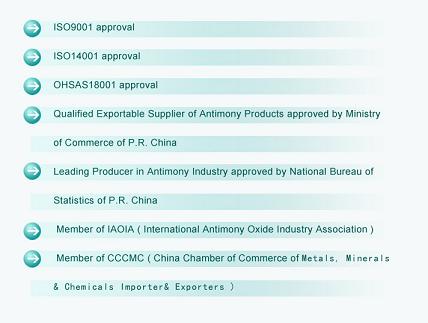
************Honor*************

************Honor*************