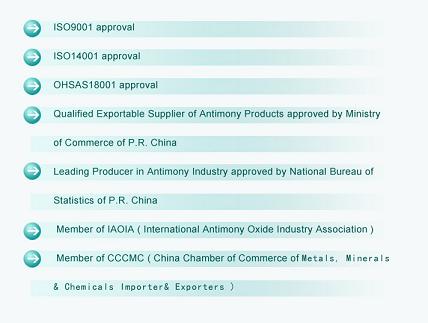
As manufacturer specialized in manufacturing of Antimony trioxide and Non-Halogen Flame Retardant,Since 2000, JIEFU have pioneered the manufacturing of flame retardant masterbatches in China.JIEFU initiated from custom flame retardant compounding of all commodity and engineering plastics to technologically sound production of fiame retardant masterbatches under the brand name JIEFU masterbatches.

Wednesday, October 24, 2007

Antimony export market unchanged

The export market for antimony ingot remains unchanged. While Chinese state-owned exporting enterprises still complain their offers of USD5,700-5,800/t FOB are unacceptable for foreign buyers, concluded deals have been reported at USD5,500-5,600/t FOB.

A Japanese trader reported that offers from Chinese state-owned exporting enterprises are as high as USD5,750-5,800/t FOB, USD150-200/t higher than those offered by some others suppliers. "We can understand why Chinese exporters hold the high offer as their purchasing price runs high and the export of the material is restrained according to the export policy," said the source. "However, neither consumers nor us cannot accept the price."

The source trades small quantities of antimony ingot, and only buys one or two containers after receiving inquiries from customers. The source claimed that they could obtain antimony ingot at a level slightly higher than USD5,600/t CIF Japan but acknowledged that those materials might be shipped out of China through illegal ways.

A Guangdong-based trader revealed that demand of antimony ingot from Asian market is not strong. "Major consumers usually sign long-term supplying contracts to satisfy the demand for production, and some-to-medium consumers only buy from hand to mouth due to the high price" said the source.

The source did not conclude any antimony ingot deals in the past week and reported some Korean and Japanese buyers would not like to accept the offer of around USD5,600/t FOB. Meanwhile, the quotation of USD5,650/t CIF Rotterdam was also turned down buy European customers.

...
Read more...

Manganese market in stalemate

Manganese metal price has been declining to the current level of RMB17,300-17,600/t (USD2,304-2,344/t) ex works. Little business goes on and most participants tend to watch and wait, but sources think the market will not recover soon due to the low demand and large stock.

A Hunan-based producer, who is running at its full capacity of 10,000tpy and holds a stock of 300t on hand, did not sell material recently due to the low bid from buyers. The producer informed few deals were closed at RMB17,300-17,400/t (USD2,304-2,317/t) ex works, but he refused to sell below RMB17,500/t (USD2,330/t) ex works. "Export market also keeps slack with large stockpile in Rotterdam, so the domestic price can only be pulled up by internal demand," commented the source. "Therefore, the market will not recover soon."

The source revealed that the price of sulphate rose by around RMB100/t (USD13/t) from last month to RMB800/t (USD107/t). The manganese ore in their mine was RMB700/t (USD93/t) last month and may rise a little in the coming days, while the market price for manganese ore is RMB700-800/t (USD93-107/t) delivered to plants.

A Guizhou-based producer, with a full capacity of 30,000tpy, revealed that the market is in an unstable state compared with the previous years. The slack market is affected by many factors. The demand from steel mills has not reached the level as expected and most smelters hold large stock. The consumers stay away from the market for lower prices while the smelters also hold back from selling and hope the market to turn better.

According to the source, the market seems to be chaotic and no one can predict when it will warm up. If the supply of raw materials keeps stable and demand moves up, the market is likely to rebound in mid-November or early December. However, it is hard to predict what a level it will reach. Most participants are waiting for a clear situation.

The market will keep in stalemate for a while and may warm up in mid-November. However, participants think the rising scope will not be large and it still needs time to identify the direction.

...
Read more...

Tin concentrate price remains firm

As the supply of tin concentrate is still unable to meet the strong demand from smelters in Chinese market, tin concentrate prices remain firm.

A source from a Guangxi-based tin mine said that they just sold 20t of tin concentrate 60%min at the high price of RMB130,000/t (USD17,310/t) with VAT included early this week. "It is the highest price we ever sold," said the source, adding that the prices of tin concentrate grading 60%min and 40%min are at about RMB119,000/t (USD15,846/t) and RMB115,000-116,000/t (USD15,313-15,446/t) with VAT excluded respectively.

The source commented that the supply of high grade tin concentrate is tight in domestic market, so many smelters mixed the high grade material with low grade one.

The mine halted production early this month, either do other mines in the local market. Therefore, the supply of the material will become tighter in the coming weeks. As for the prospect of tin market, the source said that smelters have to put tin ingot price at above RMB147,000/t (USD19,573/t), if they purchase tin concentrate at the above prices.

A Guangdong-based tin concentrate supplier offered tin concentrate 50%min at RMB125,000/t (USD16,644/t) with VAT included, the same level compared with that last week.

The source reported that they are holding about 20t of tin concentrate, but not in a hurry to sell the material in the short term. "On the back of tight supply, the price of the material may continue to rise in the coming weeks," said the source.

...
Read more...

Chinese high-purity magnesia sells good

Chinese high-purity magnesia market keeps firm these days with the prevailing price in the range of RMB1,600-1,700/t (USD213-227/t) ex works for high-purity 97%min, participants reported.

A Haicheng-based smelter, with an output of 10,000t of high-purity magnesia, sells 300t of the material at RMB1,650/t (USD220/t) ex works last week. The smelter insisted on their concluded price at RMB1,550-1,600/t(USD207-214/t) ex works for high-purity 96.8%min this week.

"There were no much obvious changes these days for high-purity magnesia, because the demand keeps stable," said the source. "We received orders from long-term customers and new customers as well."

A smelter in Anshan, running at its full capacity of 50,000t of high-purity magnesia, received many orders in October. "We are fulfilling the orders received in early October," said the source.

The smelter sells high-purity 98%min which is his leading and best selling material at RMB1,750/t (USD233/t) ex works in the two months.

Participants show an optimistic viewpoint towards high-purity magnesia market in October in view of the orders they received.

...
Read more...

FCC metals passivation sdditives applied to catalyst

<a href="http://feeds.feedburner.com/JiefuAntimonyTrioxide"><img src=" http://feeds.feedburner.com/JiefuAntimonyTrioxide.gif" style="border:0" alt="JIEFU antimony trioxide"/></a>
Abstract

A process and apparatus for incorporating additives into a circulating inventory of equilibrium catalyst in a fluid catalyst cracking (FCC) unit are disclosed. Hot regenerated catalyst is removed from the FCC regenerator, cooled, optionally subjected to magnetic catalyst separation, and at least a portion of the cooled catalyst is contacted with a solution of an additive material without forming a separated liquid phase. Additive treated catalyst is recycled to the FCC unit, preferably directly into the regenerator. <span class="fullpost">
Claims

We claim:
1. In a fluidized catalytic cracking (FCC) process with a circulating inventory of equilibrium catalyst passing from a cracking reactor wherein hydrocarbon feed is cracked to produce lighter catalytically cracked products and spent catalyst is regenerated in a catalyst regenerator at catalyst regeneration conditions to produce regenerated catalyst at a temperature of 1200 to 1600° F. which is recycled to the cracking reactor, the improvement comprising:

(a) removing a portion of the regenerated catalyst from the catalyst regenerator;

(b) cooling the regenerated catalyst in a catalyst cooler to produce cooled catalyst;

(c) adding to the cooled catalyst a solution of an additive material which comprises antimony in an amount less than or equal to the amount of liquid needed for incipient wetness impregnation to produce additive-impregnated catalyst;

(d) recycling to the cracking reactor at least a portion of the additive impregnated catalyst.

2. The improvement of claim 1 wherein said catalyst is cooled in step (b) to a temperature below 500° F.

3. The improvement of claim 1 wherein said catalyst is cooled in step (b) to a temperature below 300° F.

4. The improvement of claim 1 wherein said regenerated catalyst has a spectrum of metals levels, including higher and lower metals levels and cooled catalyst is charged to a magnetic catalyst separator to produce a higher metals reject fraction which is discarded and a lower metals recycle fraction, and wherein the solution is added to the lower metals recycle fraction.

5. The improvement of claim 1 wherein the additive is an oxide of antimony.

6. The improvement of claim 1 wherein the additive is an aqueous solution.

7. In a fluidized catalytic cracking (FCC) process with a circulating inventory of equilibrium catalyst passing from a reactor wherein hydrocarbon feed is cracked to produce lighter, catalytically cracked products and spent catalyst, which is regenerated in a catalyst regenerator at catalyst regeneration conditions to produce hot regenerated FCC catalyst which is recycled to the cracking reactor comprising:

(a) removing a portion of regenerated catalyst from the catalyst regenerator;

(b) cooling the removed catalyst in a catalyst cooler to produce cooled catalyst;

(c) magnetically separating the cooled catalyst into at least one high magnetic susceptibility fraction and at least one lower magnetic susceptibility fraction;

(d) removing from said FCC process at least one high magnetic susceptibility fraction;

(e) contacting a lower magnetic susceptibility fraction with a solution of metals passivation additive material which comprises an antimony compound in an amount up to the amount of liquid needed for incipient wetness impregnation of said low magnetic susceptibility fraction to produce a free-flowing fluidized treated catalyst fraction;

(f) recycling to said catalytic cracking unit at least a portion of said treated catalyst.

8. The process of claim 7 wherein the cooling step (b) cools the catalyst to below 300° F.

9. The process of claim 7 wherein the antimony compound is a soluble oxide.


Description

FIELD OF THE INVENTION

This invention relates to catalyst and additives for the fluidized catalytic cracking process (FCC) and MagnaCat.RTM. magnetic separation of FCC equilibrium catalyst.

BACKGROUND OF THE INVENTION

Fluidized catalytic cracking (FCC) is well known and widely used for conversion of heavier feeds boiling in the gas oil and heavier range to lighter products including gasoline.

One of the problems encountered in FCC processing is that the heavy feeds processed contain metals, such as nickel and vanadium, which deposit on the circulating FCC catalyst. The deposited Ni+V act as catalyst poisons, promoting undesirable coke formation as well as excessive hydrogen and light gas formation.

Refiners have resorted to several tactics to avoid nickel and vanadium poisoning during FCC processing. The approaches could be arbitrarily classified three ways:

1. Keep Ni+V out of the FCC feed;

2. Leave Ni+V in the feed, but passivate or trap the metals once they reach the FCC catalyst; and

3. Allow Ni+V to deposit on the catalyst and use a magnetic separation process to remove the oldest, most metals-contaminated catalyst.

Approach no. 1, keeping the Ni+V out of the feed, has been used for over fifty years. The simplest and highly effective way to keep metals out is to distill the FCC feed. Distilled feeds are usually metals-free, or have such low metals levels that no special steps need to be taken to deal with Ni/V contamination. Distillation is simple, inexpensive, and widely used. One drawback is that distillation keeps significant amounts of potentially high value, readily convertible hydrocarbon out of the FCC unit. Phrased another way, if a refiner limits the feed to the FCC unit to distillable feeds, a lot of profit is left in the non-distillable, or residue fraction of the crude oil charged to the refinery. Solvent deasphalting of heavy feeds is effective at removing most metal contaminants from even non-distillable hydrocarbon feed. Deasphalted oil (DAO) can be charged to the FCC, with the asphalt fraction used for road construction, or sent to a coker. The drawback to this approach is the significant capital and the operating expense of operating a de-asphalting unit.

Most refiners are driven by economics to process some residual fractions in their FCC units and use approach no. 2, metals passivation. Thus, many FCC units now process feeds with a few weight percent resid up to 10 or 20 weight percent resid. With such feeds comes Ni and/or V catalyst contamination. One way to tolerate higher metals levels on FCC equilibrium catalyst is to passivate the deposited contaminating metals. Although many metal passivators are known, an especially effective and widely used passivator is antimony.

Metals passivation, usually by antimony addition, is probably the most popular method in the world for solving the problem of heavy metals in feeds. There are some drawbacks to use of Sb for metals passivation. Antimony is expensive, potentially toxic, and fugacious. It is difficult to run an accurate antimony balance around a typical FCC unit. Some of the antimony is believed to deposit on the walls of fired heaters, or perhaps on other solid surfaces within the FCC unit. There is enough problem with such deposits that U.S. Pat. No. 4,167,471 was granted on the discovery that adding the antimony compound after the FCC feed heater, rather than before, increased the amount of antimony that ended up on the catalyst.

Even with antimony injection after the FCC feed preheater, much of the antimony addition has been difficult to trace. Because of difficulties with Sb addition, refiners are now considering approach no. 3, magnetic beneficiation. The third method of dealing with excessive amounts of Ni and/or V in the FCC feed is to use the MagnaCat.RTM. magnetic catalyst separation process developed by Ashland Petroleum Company, Refining Process Services and the M.W. Kellogg Company. More details of this process are disclosed in one or more of the following patents:

U.S. Pat. No. 4,406,773 discloses magnetic separation of high activity catalyst from low activity catalyst.

U.S. Pat. No. 5,106,486 (Re. 35,046) teaches adding iron compound continuously or periodically to the circulating catalyst.

U.S. Pat. No. 5,147,527 covers the concept of using a magnetic rare earth roller device (RERMS) for magnetic separation.

U.S. Pat. No. 5,171,424 teaches the use of highly paramagnetic heavy rare earths as Magnetic Hook™ additives that increase catalyst performance.

U.S. Pat. No. 5,190,635 teaches accumulation of iron on the catalyst and formation of superparamagnetic or ferromagnetic species.

U.S. Pat. No. 5,230,869 covers the discovery of a highly superparamagnetic species, which when present in aged equilibrium catalyst, further improves separation due to its high magnetic susceptibility compared to normal paramagnetic iron.

U.S. Pat. No. 5,328,594 teaches use of heavy rare earths as Magnetic Hook™ additives.

U.S. Pat. No. 5,364,827 teaches adding amounts of magnetically active moieties, over time, so the moiety deposits on catalyst or sorbent in an FCC unit or similar circulating hydrocarbon conversion unit which can be separated from catalyst which has been in the system a shorter time.

U.S. Pat. No. 5,393,412 teaches a catalyst recovery unit ancillary to an FCC or similar unit, which permits magnetic separation, sieving and attriting of equilibrium catalyst.

U.S. Pat. No. 5,538,624 teaches retaining specialty additives by doping them with lots of magnetic metals.

SUMMARY OF THE INVENTION

We have discovered a better way to add additives such as antimony and Magnetic Hook™ additives to an FCC unit with a magnetic catalyst separation unit. We discovered that we could significantly increase the efficiency of a catalyst additive by employing one, and preferably two, mechanisms around the magnetic separation unit.

The primary mechanism for increased retention of liquid additive on FCC catalyst is believed to be regenerating the catalyst to produce clean, regenerated catalyst, then cooling below 500° F., and then spraying the cooled catalyst with a solution, preferably a fine mist of an aqueous solution, containing the desired additive. Ideally, the cooled, treated, catalyst is then sent back to the catalyst regenerator to, in effect, calcine the additive and fix it more permanently on the equilibrium catalyst.

Another mechanism for improving additive addition is to cool the catalyst, pass it through a magnetic separation unit, such as a MagnaCat.RTM., and add additive only to that portion of the catalyst destined for recycle to the FCC unit. If 10 tons/day of equilibrium catalyst are charged to the magnetic separation unit, with 2 tons/day rejected to landfill, the additive would be applied exclusively to the 8 tons/day recycle fraction, with none applied to the reject fraction.

The effect of these two approaches is cumulative. In the case of a 20/80 reject/recycle magnetic separation process, spraying a manganese compound on the recycle fraction, rather than the total fraction, increases the apparent effectiveness of the manganese by 25%.

Because addition of an aqueous solution of additives, e.g., antimony to cooled, regenerated equilibrium catalyst is roughly 90 to 100% efficient, as compared to perhaps 50% efficient when added to the FCC feed upstream of the FCC preheater, the apparent effectiveness of antimony injection is roughly doubled.

A refiner using our approach to manganese or antimony addition could make from roughly 2 to 2.5 times better use of the manganese or antimony, as compared to prior art injection methods involving adding it to the FCC feed.

Accordingly, in one aspect, the present invention provides an improvement in a fluidized catalytic cracking (FCC) process with a circulating inventory of equilibrium catalyst passing from a cracking reactor wherein hydrocarbon feed is cracked to produce lighter catalytically cracked products and spent catalyst, and spent catalyst is regenerated in a catalyst regenerator at catalyst regeneration conditions to produce regenerated catalyst at a temperature of 1200 to 1600° F. which is recycled to the cracking reactor. The improvement comprises: (a) removing a portion of the regenerated catalyst from the catalyst regenerator; (b) cooling the regenerated catalyst in a catalyst cooler to produce cooled catalyst; (c) adding to the cooled catalyst a solution of an additive material in an amount less than or equal to the amount of liquid needed for an incipient wetness impregnation to produce additive-impregnated catalyst; and (d) recycling to the cracking reaction at least a portion of the additive-impregnated catalyst. The catalyst is preferably cooled to a temperature below 500° F., more preferably to a temperature below 300° F. Preferably, the regenerated catalyst has a spectrum of metals levels, including higher and lower metals levels, and the cooled catalyst is charged to a magnetic catalyst separator to produce a higher metals reject fraction which is discarded and a lower metals reject fraction, wherein the additive solution is added to the lower metals recycle fraction. The additive material can comprise a metals passivation additive, a magnetic hook material, or the like. The metals passivation additive preferably comprises antimony, more preferably an oxide of antimony, especially in an aqueous solution. The additive solution can also comprise a magnetic hook, in which case the recycle fraction has a relatively low magnetic susceptibility, but after treatment with the magnetic hook, the recycle fraction has an increased magnetic susceptibility. Other passivation elements which can be included in the solution include tin, manganese, bismuth and the like.

In another aspect, the present invention provides a fluidized catalyst cracking (FCC) process with a circulating inventory of equilibrium catalyst passing from a reactor wherein hydrocarbon feed is cracked to produce lighter catalytically cracked products and spent catalyst which is regenerated in a catalyst regenerator at catalyst regeneration conditions to produce hot regenerated FCC catalyst which is recycled to the cracking reactor. The process comprises the steps of: (a) removing a portion of regenerated catalyst from the catalyst regenerator; (b) cooling the removed catalyst in a catalyst cooler to produce cooled catalyst; (c) magnetically separating the cooled catalyst into at least one high magnetic susceptibility fraction and at least one lower magnetic susceptibility fraction; (d) removing from the FCC process at least one high magnetic susceptibility fraction; (e) contacting a lower magnetic susceptibility fraction with a solution of an additive material in an amount up to the amount of liquid needed for incipient wetness impregnation of the low magnetic susceptibility fraction to produce a free-flowing, fluidized treated catalytic fraction; and (f) recycling to the catalytic cracking unit at least a portion of the treated catalyst.

In a further aspect, the present invention provides an apparatus for the fluidized catalytic cracking of a hydrocarbon feed. The apparatus includes (a) a reactor for contacting the hydrocarbon feed with a source of hot regenerated catalyst from a catalyst regenerator; (b) a magnetic catalyst separation unit operatively associated with the regenerator for producing a high magnetic susceptibility fraction which is rejected from the catalytic cracking unit and a lower magnetic susceptibility fraction; and (c) an additive incorporation means for receiving the lower magnetic susceptibility fraction from the magnetic catalyst separation unit, comprising means for incorporating an additive solution onto the lower magnetic susceptibility fraction and means for recycling the resulting treated fraction to the regenerator.

BRIEF DESCRIPTION OF THE DRAWING

The FIGURE is a schematic diagram of an FCC unit and a magnetic catalyst separation unit according to the principles of the present invention.

DETAILED DESCRIPTION OF THE INVENTION

Bottoms 10 derived from distilling off a portion of crude oil enters the riser reactor 16 at 11. In the riser 16 the reduced crude contacts regenerated catalyst returning from the regenerator via line 15 and travels up the riser 16 cracking the reduced crude. Separator 17 produces product in line 18 and spent catalyst in line 19 which is contaminated with coke and metals from the reduced crude. The spent catalyst from line 19 enters the regenerator 20 and is oxidized with air via line 21 to burn off coke and thereby regenerate the catalyst for return to the riser 16 via line 15. About 8% of the regenerated catalyst is diverted through line 24 to catalyst cooler 25 and to feed to magnetic separator 26, where it falls onto belt 27, moves past roller 28, a high intensity rare earth-containing permanent magnetic roller which splits the catalyst into two or more portions 29 to 32. More magnetic portions, e.g. 29, and/or 29 and 30 are rejected for chemical reclaiming, metals recovery, or disposal. The less magnetic (less metal-contaminated) portions 31 and/or 31 and 32 travel through line 33 back to the regenerator 20. Manganese additive 9 may be a Magnetic Hook™ additive either added in amounts of 0.1 to 100 ppm to the feedstock in an organic solvent or water at 10 or on the catalyst at the bottom of the riser 11 prior to catalyst contact with oil, if desired.

In the present process, we spray on a solution of a catalyst additive material after cooling the catalyst in catalyst cooler 25 but before recycle of the catalyst regenerator 20. Metals passivating additive is preferably sprayed onto the recycle catalyst fraction via nozzle 100, receiving Sb solution from line 110 and discharging a finely atomized spray 105 onto the recycle fraction. Additive may also be added via injection means 120.

If desired, additive may be sprayed directly onto catalyst onto belt 27 or via one or more sprayers associated with one of the collection bins used to collect catalyst for recycle to the FCC unit. It is also possible to directly inject additive solution into the line transporting catalyst back to regenerator 20.

Regardless of where additive solution is added, it preferably is added in a controlled manner so that clumping or sticking of the catalyst does not occur.

The process and apparatus of the present invention provide a unique and better way to add soluble additives to FCC catalyst.

Preferably the additive is an antimony compound, most preferably an aqueous solution of an antimony compound. Reference is made to the following patents on antimony addition to provide more details on suitable antimony compounds and the amounts of antimony that should be added: U.S. Pat. No. 4,167,471; U.S. Pat. No. 4,255,287; U.S. Pat. No. 4,562,167; and U.S. Pat. No. 5,378,349.

The amount of antimony or additive present on catalyst in our process will be essentially the same as the amount of antimony needed on catalyst in prior art processes.

In addition to conventional metal passivation agents, such as antimony, it is also possible to add other materials using the process and apparatus of the present invention. Magnetic Hooks™ additive may be efficiently added using our invention. Some Magnetic Hooks™ additives also function as acidity enhancing additives, so that manganese may be added as a magnetic hook or for its ability to enhance activity, provide more resistance to deactivation, increase conversion and reduce coke and hydrogen yields, all as discussed in U.S. Pat. No. 5,198,098. Other additives which can be added to the catalyst according to the present invention include water soluble compounds of tin, manganese, bismuth and the like. Carbon monoxide combustion additives, such as an aqueous solution of a platinum compound, can also be sprayed onto the catalyst using the apparatus of the present invention. The apparatus can also be used to increase the rare earth content of the catalyst to improve steam stability of the zeolites, or as a Magnetic Hook™ additive. The process can also be used to add known, or yet to be developed, additives for control of NOx, SOx, and the like.

It is essential to remove the catalyst from the regenerator and cool it before contacting the regenerated catalyst with any additive. Preferably the catalyst is cooled more than 100° F., more preferably cooled to a temperature in the range of 200-300° F. This temperature is high enough to promote rapid vaporization of the solvent in the additive solution, but not so high as to prevent good contacting of the additive solution with the catalyst surface. If the catalyst surface temperature is too high, there may be impaired contacting of liquid/catalyst, much as water never wets the surface of a frying pan which is too hot.

It is preferable to have a certain minimum temperature, otherwise the catalyst can easily form clumps when any liquid droplets that are oversized are inadvertently sprayed on the catalyst. We try never to have a stable liquid phase in our process. It may seem a little unusual to call for catalyst "impregnation" when the catalyst temperature at the start of the process at least is preferably above the boiling point of water, but that is preferred to minimize fluid handling problems.

EXAMPLES

A number of experiments were performed in our laboratories to determine the validity of this processing concept. The examples did not include magnetic separation in order that the test procedure might be simplified. The test also represents an upper limit on use of additive solution, i.e. an incipient wetness procedure was used. In practice we would probably use less impregnating solution to avoid formation of clumps or sticky masses of water-soaked catalyst.

EXAMPLE 1

The catalyst tested was a 50/50 blend of two commercially available catalysts available under the trade designations RAMCAT and NOVA which had been steamed and metallated using our standard procedures. The additive used was an aqueous solution of antimony pentoxide, methanol, ethylene glycol and amines obtained commercially as NALCO 5006. The antimony content was measured to be 21 weight percent. There were three sets of runs made each in duplicate: conventional metals addition, spray-on-metals addition, and baseline with no metals addition. The additive was added at a target ratio of 0.5/1 Sb/Ni by weight. The nickel content of the catalyst was 1400 ppm.

Baseline--No Metals Addition

Three cycles were run. Each cycle was run with 188 g of feed and 564 g of catalyst without an antimony addition for a catalyst/oil ratio of 3.0.

Conventional Metals Additive Addition

The conventionally added antimony additive was added to the feed in three cycles. Each cycle was run with 188 g of FCC feed with 564 g of catalyst blend.

Spray-On Metals Additive Addition

The antimony additive was diluted with water and sprayed onto the catalyst with a hand operated plastic spray bottle. The catalyst (800 g) was put into a ceramic crucible while it was sprayed with the additive solution. The additive (2.67 g) was diluted with the calculated amount of water to get the catalyst to incipient wetness (pore volume times the amount of catalyst ((0.32 ml/g)*(800 g=256 cc)). The sprayed on catalyst was then calcined in air at 1100° F. for four hours. The antimony laden catalyst was then run for three cycles. Each cycle was run with 188 g of FCC feed with 564 g of catalyst blend for a catalyst/oil ratio of 3.0.

Catalyst samples obtained from each of the methods were analyzed for metals and microactivity test (MAT) analysis. The results are presented in Table 1

                  TABLE 1
______________________________________
Additive In
Sprayed On
Property No Additive Feedstock Additive
______________________________________
MAT (vol %) 76 76 78
Hydrogen Factor 10.0 9.9 6.7
Antimony (wt %) <0.01 0.02 0.09
Nickel (wt %) 0.14 0.13 0.15
Sb/Ni Ratio <0.07 0.15 0.60
______________________________________


EXAMPLE 2

The procedures of Example 1 were repeated using a 100% NOVA catalyst. The results are presented in Table 2.

                  TABLE 2
______________________________________
Additive In
Sprayed On
Property No Additive Feedstock Additive
______________________________________
MAT (vol %) 76 75 76
Hydrogen Factor 10.0 8.8 6.2
Antimony (wt %) <0.01 0.024 0.1
Nickel (wt %) 0.14 0.13 0.14
Sb/Ni Ratio <0.07 0.16 0.71
______________________________________


The above data show that antimony was effective at reducing hydrogen yield, and was nearly an order of magnitude better when added as a spray onto the catalyst than when introduced with the hydrocarbon feedstock. Antimony appears to be effective only if it deposits on the catalyst; the decrease in hydrogen yield is directly proportional to the amount of antimony deposited on the catalyst. Adding antimony with the feedstock resulted in consistently low antimony recoveries, but quite surprisingly, nearly all of the antimony was recovered when sprayed as a mist onto the catalyst.

ps:
We can supply any quantity and any kind of Antimony products from stock.would you please inform us how many you need and your target price,  then we will confirm ASAP. We are sincerely hope to do business with you and establish long term business relationship with your respectable company. 

Look forward to hearing from you soon.
 
Best regards,

Sam Xu 
Contact me:
MSN: xubiao_1996@hotmail.com 
GMAIL: samjiefu@gmail.com 
SKPYE:jiefu1996
 
<a alt="Blog and Blogs" href="http://jiefuantimonytrioxide.blogspot.com"><b><font face="Arial" color="#003366" size="1">
Chinese antimony market</font></b></a>
<br/></span>

...
Read more...

Tuesday, September 18, 2007

Chemforecast Plastic additives supply shifts

JIEFU antimony trioxide
Supply of plastic additives for the next 12-18 months looks secure and pricing spikes are beginning to ease. But buyers may have to look to new regions for continued supply.

Fred Gastrock of Townsend Polymers Services and Information in Houston forecasts global sales to hit 27 billion lbs in 2009, but the regions of supply are changing.

“Additive plants are moving toward the markets,” according to Gastrock, who points out that developing countries first build polymer plants, then resin plants and finally additive plants. However, currently there is still a strong international trade in polymer additives.

Regions and countries where additives production is growing rapidly include China with a growth rate for additives production of 8-10% by volume annually. In much of the rest of Asia and in the Middle East the annual growth rate is in the “high single digits” according to Gastrock. Production in India, Russia and Turkey is growing rapidly from a small annual production base of 10 million tons, 5 million tons, and 3.3 million tons respectively.

Philadelphia-based Rohm and Haas provides an example of the globalization occurring in the additives industry. The firm is working with Turkish firm Polisan on several projects, including a partnership for the manufacture of emulsions for the paint market. Late last year, Rohm and Haas signed a letter of intent and announced that it is in the final planning discussions with Polisan to construct a plastics additives plant in Gebze, Turkey. The plant will produce acrylic impact modifier and processing aids. Planned capacity is 40,000 metric tons annually.

Meanwhile, in China, Rohm and Haas and China’s Weihai Jinhong Polymer signed an agreement last January to form a new joint venture. Jinhong Rohm and Haas Chemicals Company Ltd. (JinHaas), intends to manufacture a complete range of quality plastics additives products and provide technical support to the building and construction and PVC packaging segments of the Chinese market according to Rohm and Hass’ Joan Hoffmeier Gorrell, business manager for building and construction, and Bill Magee, business manger for packaging, durables and transportation. The joint venture is currently awaiting Chinese government approval.

While the U.S. is not building new plants, there are few shutdowns of existing plants. For example, Rohm and Haas intends to meet slowly growing domestic market needs though its existing U.S. plants. In Europe, there have been some recent plant shutdowns. For instance, Chemtura is shutting down some antioxidant plants according to Gastrock.

Rohm and Haas, Chemtura and Ciba produce a broad range of additive types. Other sizable producers are Arkema, Rohm and Haas, Albemarle and Baerlacher. Major plasticizer producers include ExxonMobil, BASF and Eastman Chemicals according to Gastrock. He notes that large independent compounders include PolyOne, A. Schulman, Clariant and RTP.

Demand for U.S. additives is growing 3-4% by volume annually. European sales growth is slightly less, at 2-3%. Japanese sales growth is less than Europe’s. Asia sales are growing rapidly as new polymer plants come online.

Plasticizers constitute 55% of the total additives market. The various market components and their relative size (see chart).

Gastrock forecasts overall U.S. additive sales will grow 3-4% annually through 2009. The additive types increasing faster than this average are growing from a smaller base. These include light stabilizers and nucleating agents (clarifying agents). Polypropylene additive use is growing slightly faster than the average. Additives used in wood–plastic composites are also growing more rapidly than average but from a small base.

The big feedstock price surge in 2004 through early 2006 that pushed additive prices up 20-50% has slowed considerably. Margins have improved and additives producers have been able to manage most of the raw materials price increases.

Hoffmeier Gorrell and Magee “expect raw material pressures to continue to be driven by supply and demand dynamics in the feedstock industries.” Raw material prices remain extremely volatile,” they note. For example, since the fourth quarter of 2006, the cost of tin has doubled. In the first six months of 2007, Rohm and Haas announced increases on its Advastab tin-based heat stabilizers totaling 17%. An additional 10% increase went into effect on June 15.


We can supply any quantity and any kind of Antimony products from stock.would you please inform us how many you need and your target price, then we will confirm ASAP. We are sincerely hope to do business with you and establish long term business relationship with your respectable company.

Look forward to hearing from you soon.

Best regards,

Sam Xu
Contact me:
MSN: xubiao_1996@hotmail.com
GMAIL: samjiefu@gmail.com
SKPYE:jiefu1996


flame retardant masterbatches


...
Read more...

Saturday, September 15, 2007

Flame retardant polyolefin pallets and flame retardant master batch for their production

JIEFU antimony trioxide
Polyolefin-based pallets capable of passing standard pallet flammability tests are prepared by molding the pallet or one or more subassemblies thereof, of a polyolefin molding resin containing a flame retardant package containing a halogenated organic flame retardant, alumina trihydrate, and antimony trioxide. The flame retardants are advantageously supplied as a master batch at a concentration higher than that desired in the pallet or subassembly, in a polyolefin-compatible polymer.


Claims

What is claimed is:

1. A flame retardant molded polyolefin pallet comprising one or more subassemblies, at least one subassembly comprising a polyolefin containing a flame retardant package comprising as flame retardant components

a) 4-14% halogenated organic flame retardant,

b) 4-15% alumina trihydrate, and

c) 1-5% antimony trioxide, said percentages based on the weight of polyolefin and the sum of flame retardant components a) to c).

2. The pallet of claim 1 wherein the flame retardant components comprise

a) 7-12% halogenated organic flame retardant;

b) 8-12% alumina trihydrate;

c) 2-4% antimony trioxide; and

said percentages based on the weight of polyolefin and the sum of flame retardant components a) to c).

3. The pallet of claim 1, wherein subassemblies which comprise the most flammable portions of said pallet contain said flame retardant components.

4. The pallet of claim 1, wherein all of said subassemblies contain said flame retardant components.

5. The pallet of claim 1, wherein said polyolefin comprises polypropylene.

6. The pallet of claim 1, wherein said one or more subassemblies containing said fire retardant components further comprise a filler, fibrous reinforcement, or both filler and fibrous reinforcement.

7. The pallet of claim 1, further comprising one or more auxiliary flame retardants.

8. The pallet of claim 1, wherein said halogenated flame retardant comprises tetrabromobisphenol A.

9. A process for the manufacture of a flame retardant polyolefin pallet or subassembly thereof, comprising

a) supplying a polyolefin molding resin

b) supplying a flame retardant package comprising flame retardant components

b)i) from 4-14% halogenated organic flame retardant;

b)ii) from 4-15% alumina trihydrate;

b)iii) from 1-5% antimony trioxide;

c) uniformly blending said polyolefin resin with the components b)i to b)iii of said flame retardant package to form a flame retardant-containing polyolefin molding resin; and

d) molding a polyolefin pallet or subassembly thereof from said flame retardant-containing polyolefin molding resin.

10. The process of claim 9, wherein said flame retardant components are supplied in a master batch of a polyolefin compatible polymer resin containing said flame retardant components in an amount higher than the amount desired in said pallet or subassembly thereof, and supplying sufficient polyolefin to reduce the level of said flame retardant components to the range of 4-14% a), 4-15% b), and 1-5% c).

11. The process of claim 9, wherein said pallet comprises at least a top deck and a bottom deck, optionally having a plurality of columns between said top deck and said bottom deck, at least one of said top deck, said bottom deck, or said columns being molded from a polymer of different flammability characteristics than another of said top deck, bottom deck, or columns.

12. The process of claim 11, comprising molding said top deck of said flame retardant-containing polyolefin molding resin.

13. The process of claim 11, further comprising constructing said top deck or a portion thereof of a non-polyolefin polymer which exhibits greater inherent flammability resistant characteristics than polyolefin.

14. The process of claim 9, wherein said polyolefin comprises polypropylene.

15. The process of claim 9, wherein said polyolefin pallet or subassembly thereof further contains a filler, fibrous reinforcement, or a mixture thereof.

16. A flame retardant polymer master batch suitable for addition to a polyolefin molding resin to prepare the pallet or subassembly thereof of claim 1, said master batch comprising 20 weight percent or more halogenated organic flame retardant, 20 weight percent or more of alumina trihydrate; 6 weight percent or more of antimony trioxide, and at least 10 weight percent of a polymer which is compatible with polyolefin in injection molding.

17. The master batch of claim 16, comprising 20 to 25% halogenated flame retardant, 20 to 40% alumina trihydrate, 6 to 15% antimony trioxide, and minimally 10% polyolefin-compatible polymer, said percentages being based on the total weight of the master batch.

18. The master batch of claim 16, comprising 25-35% halogenated organic flame retardant, 25-40% alumina trihydrate, and 8-12% antimony trioxide, balance polyolefin.

19. The master batch of claim 16 wherein said polyolefin comprises polypropylene.

20. The master batch of claim 16, wherein said halogenated organic flame retardant comprises tetrabromobisphenol A.

Description

BACKGROUND OF THE INVENTION

1. Field of the Invention

The present invention pertains to flame retardant shipping pallets of polyolefin plastic.

2. Background Art

In the past, shipping pallets were made largely of wood. More recently, numerous materials have at least partially superseded wood-based pallets. For example, pallets of injection molded polymers are being used increasingly. Such polymer pallets have numerous advantages. For example, polymer pallets are capable of being molded in complex shapes which facilitate the shipping of numerous types of articles. Polymer pallets are also easy to clean, which encourages their reuse.

Wood pallets are inherently combustible, and are rather easily ignited. While polymer articles are in general somewhat more difficult to ignite, once ignited they also constitute combustible products, and pound for pound have more potential energy than wood articles. In the shipping industry, empty pallets are often stacked together for reuse or for return to the shipper ("idle storage"). When wood pallets are so stacked and ignited, the fire is generally concentrated in an upward direction. However, when polymer pallets burn, in addition to having greater potential energy (combustibility), the flame can also spread downward by dripping. Thus, the combustion of polymer pallets involves more heat and more potential energy, a combustion mechanism not found in wood pallets. Thus, it is desirable to minimize the combustibility and heat release, and in turn lower the flame spread of polymer based pallets.

One solution which has been proposed is to produce pallets of polymers which are less flammable than pallets of commodity resins, such as polyolefins. However, such speciality polymers, e.g. polyphenylene oxide polymers, are considerably more expensive than the polyolefin polymers conventionally used to manufacture pallets. Such specialty polymers are also, in general, much more difficult to mold than polyolefins.

A standard test for pallet flammability has been established by Underwriters Laboratories, as UL 2335 "Fire Tests of Storage Pallets," referred to, for example, in WO 00/20495. In one version of this test, the "Idle Pallet Test," six stacks of pallets are assembled in a 2×3 array with a 6" longitudinal flue space longitudinally between arrays in a room with a 30 foot high flat ceiling having 165° F. (74° C.) standard response sprinklers having a design density of 0.60 gpm/ft2. An instrumented steel beam is placed near the ceiling, and the pallets are ignited by hydrocarbon soaked cellulosic bundle positioned in the flue space. The parameters assessed include flame spread, maximum steel beam temperature, and number of sprinklers activated. As can be seen, this test is a rather stringent one.

In a second version of the test, the so-called "Commodity Storage Test," a 2×2×2 array 1 of pallets 5, each carrying a Class II commodity carton 2, are placed 25 feet (7.5 m) below a 10 M watt heat release calorimeter 3 and ignited by four igniters in the center flue space, each igniter comprising a 3 inch (12.5 cm) cellulosic bundle soaked with 4 oz. (112 g) heptane in a polyethylene bag. Overhead sprinklers 4 at a height of 10 feet (3 m) are activated electromechanically when the instrumentation indicates that a sprinkler activation temperature of 286° F. (141° C.) has been reached. A series of three tests is made, with water application rates of 0.11, 0.21, and 0.31 gpm/ft2. In each test, four parameters are noted: maximum one minute mean total heat release rate; maximum one minute mean convective heat release rate; effective convective heat release rate, defined as the average convective heat release rate measured over five minutes of the most intense fire; and convective energy, the average convective heat release rate measured over the 10 minutes of most severe burning.

Although numerous flame retardants and combinations thereof are known for use in plastic articles, the stringent tests required of pallets render flame retardancy results unpredictable. Numerous flame retardants and combinations have been tested, and while many of these have been found suitable for polyolefin articles other than pallets, their use in pallets has not proven acceptable.

WO 00/20495 discloses pallets prepared from specialty resins such as polyphenylene ether resins, polycarbonate resins, vinyl aromatic graft copolymer resins, and polyetherimide resins further including arylphosphate esters and zinc chalcogenides. In U.S. Pat. No. 4,727,102, "self extinguishing" polyolefins are disclosed containing major amounts of ammonium polyphosphate, tris(2-hydroxyethyl)isocyanurate, and melamine cyanurate. However, the large amounts of additives (40%) severely compromise the properties of products prepared from the polyolefin resin.

It would be desirable to provide a polyolefin composition suitable for use in molding pallets which is injection moldable, exhibits good flame retardance in standard tests, and which is commercially cost effective. However, until now, tests of flame retardant systems for use in polyolefin polymer pallets did not result in satisfactory performance.

SUMMARY OF THE INVENTION

It has now been surprisingly discovered that polyolefin-based plastic pallets can be manufactured which satisfactorily pass standard pallet flammability tests, when the polyolefin is compounded with a fire retardant package comprising minimally a halogenated flame retardant, alumina trihydrate, and antimony trioxide. The flame retardant ingredients are preferably supplied as a master batch and incorporated into conventional polyolefin molding resins prior to injection molding.

BRIEF DESCRIPTION OF THE DRAWINGS

FIG. 1 illustrates a typical Commodity Storage Test setup to assess flammability characteristics of pallets;

FIG. 2 illustrates the average steel beam temperature in an Idle Storage Test of flame retardant polymer pallets of the subject invention and similar sized softwood pallets.

DETAILED DESCRIPTION OF THE PREFERRED EMBODIMENTS

The polymer pallets of the present invention may take numerous forms. It has been found convenient to mold pallets in several subassemblies and assemble the pallets together by snap fittings, fusion or adhesive bonding, or by a variety of such assembly techniques. In this manner, non-load bearing areas may be made of thinner section, thus minimizing raw material usage. Moreover, use of a plurality of subassemblies allows pallets of more complex shape to be produced.

The polymer of which the pallets of the subject invention are constructed is polyolefin, although it is not necessary to form all parts of these polymers. Pallet portions which contribute more to ease of flammability or flame spread may be made of other polymers which are less flammable than polyolefin or which tend to melt and/or drip less than polyolefin. A pallet construction which employs portions of different flammabilities which takes advantage of these characteristics is disclosed in commonly assigned U.S. application Ser. No. 10/040,098, filed Oct. 19, 2001, incorporated herein by reference.

The polyolefin polymers may be, for example, but not by way of limitation, polyethylene, polypropylene, or polybutylene. In general, the polyolefin polymers are copolymers, for example copolymers of ethylene with propylene, 1-butene, 1-hexene, 1-octene, or mixtures thereof, or copolymers of propylene with ethylene, 1-butene, 1-hexene, 1-octene or mixtures thereof. Homo and copolymers of propylene are preferred. Different polyolefin polymers may be used for various subassemblies. Polymer blends of polyolefins with other compatible thermoplastics or with elastomeric tougheners such as elastomeric polymers of styrene, butadiene, alkyl acrylates, and the like are also useful. When such tougheners are used, they are generally present in the form of relatively small particles, or as interpenetrating polymer networks, as is well known in the art of toughened thermoplastics.

The polyolefin polymers may also be reinforced or filled. Suitable fillers include typical reinforcing and non-reinforcing fillers such as precipitated and fumed silicas, ground quartz, diatomaceous earth, ground limestone, ground dolomite, ground felspar, mica, expanded mica, precipitated calcium carbonate, etc. The term "reinforcing" with respect to fillers generally refers to fillers of small size and high surface area, for example mean particle sizes <1 µm and specific surface areas (BET) of 50 m2 /g or higher. Suitable fibrous fillers are typically short or long glass fibers. Other fibrous reinforcement such as aramid fiber, carbon fiber, boron nitride fiber, etc., may also be used, however such materials are generally more expensive than glass fibers. Some subassemblies may be filled or may contain fibrous reinforcement whereas other subassemblies may not, or may contain differing reinforcement and/or fillers. Use of continuous fiber reinforcement is also possible in some cases, particularly when polyolefin-based GMT intermediate products are used for molding, or when resin transfer molding and similar techniques are used.

The pallet or at least one of its component subassemblies must contain a flame retardant "FR" package in accordance with the subject invention. The subject invention FR package includes, in percent by weight relative to the total weight of polyolefin and FR package, from 4 to 14% halogenated organic flame retardant, preferably 7 to 12%, and more preferably 8 to 11%; from 4-15%, more preferably 8 to 12% and most preferably 9-11% alumina trihydrate; and 1-5%, more preferably 2 to 4% and most preferably about 3% antimony trioxide (Sb2 O3), these percentages being weight percents based on the weight of polymer and flame retardants. In particular, an FR package containing 8-10% halogenated organic flame retardant, 9-10% alumina trihydrate, and 3% antimony trioxide is used.

The halogenated organic flame retardant includes polyhalogenated organic compounds such as polybrominated biphenyl oxides, halogenated phosphate esters such as tris(2-chloroethyl)phosphate and the like. However, the most preferred halogenated organic flame retardants comprise tetrabromobisphenol A ("TBBA") or admixtures of the latter with other halogenated organic flame retardants. Most preferably TBBA is present in an amount of 50% by weight or more relative to the total halogenated organic flame retardant.

The flame retardant ingredients, when solid, are supplied in pulverulent form, and may be incorporated into the polyolefin by conventional techniques, i.e. in mixers or blenders, but preferably in an extruder. It has been found that preparation of a master batch of the same or different polyolefin or other polyolefin compatible polymer, and containing approximately 2 to 5 times, preferably 2.5 to 4 times the final FR weight percentage is particularly useful. For example, a master batch containing about 30 weight percent organic flame retardant, 32 weight percent alumina trihydrate, and 10% antimony trioxide, balance polypropylene polymer, is highly useful. The master batch is then blended or "diluted" with additional polymer in an extruder prior to injection molding. By "extruder" is meant a screw-type device used to blend thermoplastics to form extrudates or to supply molten thermoplastic to an injection molding machine. The term should not be viewed as limiting, and other mixers may in principle be used.

By the term "polyolefin compatible" or simply "compatible" is meant a polymer which can be blended with polyolefin molding resin and molded into a polyolefin pallet or subassembly thereof while maintaining sufficient strength properties. The compatible polymer may phase separate to form small polymer particles or an interpenetrating polymer network, or may be miscible with the polyolefin. It is preferred that the compatible polymer be itself a polyolefin, particularly the same polyolefin or a polyolefin similar in composition to the polyolefin molding resin. For example, when polypropylene homopolymers or copolymers are used as the polyolefin molding resin, it is preferred that a polypropylene polymer be the polyolefin-compatible polymer of the flame retardant master batch.

The FR package of the present invention may also be used with auxiliary flame agents. Examples include nitrogenous organic compounds such as urea, melamine, and formaldehyde condensates thereof, in the form of powders, prills, fibers, etc., intumescents such as sugars and starches; carbon dioxide generators such as the various metal carbonates, and water generators such as hydrated metal salts. This list is exemplary, and not limiting.

Thus, in preferred embodiments, the pallets of the subject invention are molded of a plurality of subassemblies, which are then joined together, preferably by fusion bonding. In this manner, the composition of the various subassemblies may be varied to optimize pallet physical properties as well as flame retardant properties. For example, one or more of the subassemblies may contain a filler, fibrous reinforcement, or both. Likewise, as indicated previously, those subassemblies which contribute most to flammability may be more highly filled and may also contain higher levels of flame retardant. This is particularly true of the top deck of the pallet. Preferably, all subassemblies contain flame retardant, however.

Preferred pallets have a top deck, a bottom deck, and most preferably a plurality of columns between the top and bottom decks. At least the top deck and preferably all subassemblies are molded from polyolefin resin to which has been added a flame retardant master batch comprising 20 weight percent or more, preferably 20 to 25 weight percent, and most preferably 25 to 35 weight percent of one or more halogenated flame retardant(s); 20 weight percent or more, preferably 20 to 40 weight percent, and more preferably 25 to 40 weight percent alumina trihydrate; and 6 weight percent or more, preferably 6 to 15 weight percent, and more preferably 8 to 12 weight percent of antimony trioxide, at least 10% by weight of the master batch being an olefin compatible polymer.

Having generally described this invention, a further understanding can be obtained by reference to certain specific examples which are provided herein for purposes of illustration only and are not intended to be limiting unless otherwise specified.

EXAMPLE 1 AND COMPARATIVE EXAMPLE C1

Pallets were manufactured by injection molding of subassemblies from polypropylene resin. The subassemblies were assembled into completed pallets and joined together by fusion bonding. The pallet of Example 1 included the FR package of the present invention, added as a master batch containing 30% FR-720 halogenated organic flame retardant, 32% alumina trihydrate, and 10% antimony trioxide, remainder polypropylene. The master batch was added to the extruder with polypropylene resin such that the final polymer of the Example 1 pallet contained 9% FR-720 halogenated organic flame retardant, 9.6% alumina trihydrate, and 3% antimony trioxide. The comparative Example C1 contained no FR package.

Pallet Example
1 C1
Idle Storage Test pass fail
Commodity Storage Test pass fail


EXAMPLE 2 AND COMPARATIVE EXAMPLE C2

An Idle Storage Test as previously described was conducted in stacked 48×40 two-piece construction polymer pallets (polypropylene) which include the FR composition of the subject invention (Example 2). The average steel beam temperatures were plotted against time for these subject invention pallets and standard 48×40 softwood pallets. The results were presented graphically in FIG. 2. The subject invention pallets produced considerably lower temperatures 10 than the wood pallets 11, and pass the Idle Storage Test. Polyolefin pallets containing no FR package exhibit higher temperatures than do the softwood pallets, and do not pass the test. The horizontal line 12 represents the pass/fail limit.

The results indicate that the flame retardant package of the subject invention is suitable for use in pallets, where unique flame retardant properties are required. The subject invention pallet Example 1 was able to pass both Underwriters Laboratory pallet tests, while a similar pallet of the same base molding resin did not. Likewise, the Example 2 pallet shows considerable improvement over wood pallet flammability.

While embodiments of the invention have been illustrated and described, it is not intended that these embodiments illustrate and describe all possible forms of the invention. Rather, the words used in the specification are words of description rather than limitation, and it is understood that various changes may be made without departing from the spirit and scope of the invention.

* * * * *
Other References

* "Intumescents: Coating Contains Dual Components," Flame Retardancy News, vol. 11; Issue 7, Jul. 1, 2001.
* Renstrom, R., "Clean Rooms Getting Cleaner," Plastics News, vol. 13, N. 30, Sep. 24, 2001.
* "Prototype Production will Utilize Breakthrough Thermoplastic Flow Forming Technology to Achieve Superior Performance and Economic Results," Las Vegas Business Wire, Jul. 23, 2001.
* English Abstract corresponding to JP 11278485 A.
* Underwriters Laboratories, Inc. "UL 2335 Performance Testing".


We can supply any quantity and any kind of Antimony products from stock.would you please inform us how many you need and your target price, then we will confirm ASAP. We are sincerely hope to do business with you and establish long term business relationship with your respectable company.

Look forward to hearing from you soon.

Best regards,

Sam Xu
Contact me:
MSN: xubiao_1996@hotmail.com
GMAIL: samjiefu@gmail.com
SKPYE:jiefu1996


flame retardant masterbatches


...
Read more...

************Honor*************

************Honor*************