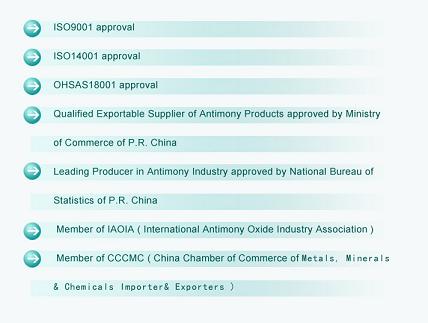
As manufacturer specialized in manufacturing of Antimony trioxide and Non-Halogen Flame Retardant,Since 2000, JIEFU have pioneered the manufacturing of flame retardant masterbatches in China.JIEFU initiated from custom flame retardant compounding of all commodity and engineering plastics to technologically sound production of fiame retardant masterbatches under the brand name JIEFU masterbatches.

Tuesday, December 11, 2007

Dowa to extract metals from used cell phones

Dowa Holdings Co., whose group includes a major nonferrous metal
company, is planning to import used mobile phones from Southeast Asia
to extract nonferrous metals such as gold and copper from them for
recycling, sources close to the company said Saturday.

The Dowa group also plans to dispose of harmful substances being used
in such phones, they said.

The plan will be a joint project with the Geneva-based Secretariat of
the Basel Convention, which is aimed at controlling transfers of
hazardous waste between nations and its disposal, according to the
sources.

The Dowa group is known to have the world's most advanced technology
for extracting nonferrous metals from electric and electronic parts.

It plans to secure nonferrous metals, for which demand has been
growing, and contribute to establishing an international system to
prevent inadequate disposal of harmful substances.

Nonferrous metals, such as gold and copper, are needed for making
substrates used in mobile phones.

In Southeast Asia, however, used cell phones are transported to China
for recycling, where only precious metals are extracted in many cases.
Hazardous substances are often left in the phones and are incinerated
with ordinary waste, according to the sources.

The Dowa group has the only smelter in Asia capable of extracting
individual metals from ores containing several metals such as copper,
gold and lead.

The technology also can be used to extract metals from cell phone substrates.

Concerned with the spread of harmful substances from Southeast Asia,
the secretariat asked Dowa, through the Environment Ministry, to help
collect resources.

Dowa, which will first collect used mobile phones from Thailand,
Malaysia and Singapore, has begun looking into methods with the
secretariat on how to collect such phones and how many can be
imported.

Imported mobile phones will be crushed and then put into a furnace to
extract nonferrous metals such as gold, copper and lead.

Arsenic, a hazardous material that will be separated, will be buried
in the smelter's final disposal area.

...
Read more...

China's moves with minor metals signals continued tightening of majors

If steel is the rice of industry and oil is the blood, then 'minor
metals' are the vitamins – since only a small amount of these
commodities are needed to alter the properties of metal alloys.

This description comes from a delegate at the Minor Metals and Rare
Earth Conference held in Hong Kong last week – a group of commodities
UBS Securities' Peter Hickson labels "not very transparent," but
growing rapidly.

Indium, bismuth, gallium and antimony are just a few of the names that
have become critical to both new high tech and material inventions,
the analyst told clients in a note.

While China contributes to more than 95% of rare earth supply its
"changing attitudes to energy, resources and the environment is
tightening supply," Mr. Hickson said. "Costs are being passed through
and future supply is strategically vulnerable, in our view.

He expects the strain to come from technological demand linked to
climate change as well as other new energy and environmental trends.

However, investors looking to get a piece of the minor metals action
are limited by the small size of the market.

Valued at less than 4% of the current copper market, the minor metals
and rare earth segment addressed at the Hong Kong conference is worth
only US$2.5-billion, Mr. Hickson estimates.

Only small-cap names offer leverage in the sector, including names
like Lynas, Navigator Resources and Arafura Resources in Australia, as
well as U.K.-listed Central African Mining and Nikanor. There are also
Chinese companies with leverage, he noted.

The key takeaway from the conference is China's dominant role in the
global minor metals and rare earth markets, Mr. Hickson said,
highlighting the fact that its attitudes are changing. China is
tightening restrictions on exports, more closely managing resources
and environmental controls, and boosting taxes on resources through
royalties.

He thinks these policy moves signal that China will continue to
tighten its supply of all major metals, such as aluminium, steel and
nickel.

So with demand for rare earth and minor metals surging in
technology-related sectors, with an estimated annual mean growth rate
between 10% and 15%, investors should get to know these names – even
if they haven't heard of rhenium or neodymium before.

...
Read more...

Smaller metal firms shy away from costly EU law

New European Union rules requiring firms to register and document
metals and other substances they handle is causing consternation among
companies which fear the law will be costly and difficult to meet.

EU figures suggest the direct cost to European industry, including
chemicals companies, of meeting the regulations are likely to be as
much as 2.3 billion euros ($3.37 billion) over 11 years.

"We are absolutely horrified by the potential cost to fully comply
with all the legislation for the products we handle," said Peter
Nicholson, director at London Chemicals and Resources, an
international distributor and supplier of metals.

The law covers all metals from high volume copper and aluminium to
minor metals such as indium, used to make liquid crystal displays for
screens, and selenium, used in glass making, construction and
agriculture.

The directive -- REACh, or Registration, Evaluation and Authorisation
of Chemicals -- is designed to protect people and the environment from
potentially hazardous materials found in manufactured goods, including
clothing and vehicles.

"It could cost us millions – just to continue our day to day
business," Nicholson said.

The rules apply to all companies handling metals and other substances
such as chemicals, including importers, manufacturers and those in the
construction industry.

Industry organisations say many downstream users, such as fabricators
of glass, are still unaware of the legislation.

"We are trying to convince small and medium-sized firms it is really
necessary to start with REACh now," said Christina Messner,
responsible for environmental policy at the German metal association
Wirtschafts Vereinigung Metalle.

She said it was necessary for the firms to start and get a clear view
of which substances that would have to be pre-registered and then
secondly to focus on data collection.
Two parts

By June 2008, metal firms must have pre-registered the substances
falling under the new law and by 2010 technical dossiers describing
their environmental impact must be ready for submission to the
European Chemicals Agency (ECHA).

"Each company will have a registration cost for each substance it puts
on the market," said general manager Tony Newson of the Stainless
Steel Producers Group at the European Confederation of Iron and Steel
Industries (EUROFER).

The steel industry has nearly 30 different substances it would have to
register, but due to sensitive information sharing when setting up a
consortium -- and sharing the cost when submitting a technical dossier
-- the original plan was delayed.

"The plan was to have an iron and steel cooperation platform but this
is taking rather a long time to get off the ground," Newson said,
referring to difficulties to set up a consortium.

In other industries, lawyers had been involved to reduce the risk of
sharing sensitive business information by using confidentiality
agreements when setting up the consortiums.

Newson said the EU Commission had calculated that if a firm had no
previous data and handled more than 1,000 tonnes of a substance, the
cost of meeting the rules could be up to 2.5 million euros.

"With the steel industry, most of the substances that we use are more
than 1,000 tonnes -- so it can be very expensive."

In the tin industry ITRI, a UK-based consultancy, had formed a
consortium with five members and an additional two were awaiting
approval to share the costs of gathering information.

"For the four years, 2007-2010, we have got around $3 million budgeted
and that is the minimum amount we anticipate," said Kay Nimmo, manager
of environmental affairs and responsible for REACh at ITRI.

"It is shared according to the tonnages of the members for the
European market," she added.

She said the largest challenge would be the technical work necessary
to generate the right kind of data required by the EU.

...
Read more...

US Antimony receives mining permit

Montana-based US Antimony has received a mining permit for its San
Miguel antimony-silver project in Mexico's Queretaro state, the
company reported in a statement.

Additionally, the permit for mill construction is expected in two
weeks, CEO John Lawrence told BNamericas.

In addition, a pipeline from a wastewater treatment plant is under
construction, the statement said.

Initial feed for the flotation mill will be from dumps from previous
mining operations, which are estimated to hold some 10,000t of mill
feed.

Meanwhile, mining will occur on four mine faces in existing,
historically mined pits. The company aims to start mining by June 1,
Lawrence said.

Sample assays from the faces, each more than 3m high, included 3.72%
antimony, 0.04oz/t gold (1.09g/t), 3.72oz/t silver; 1.69% antimony,
0.04oz/t gold, 1.82oz/t silver; 2.63% antimony, 0.01oz/t gold,
8.72oz/t silver; and 4.74% antimony, 0.02oz/t gold and 18.4oz/t
silver.

Concentrates of antimony, silver and gold from the 150t/d mill will be
processed at US Antimony's smelter at Estacion Madero in Mexico's
Coahuila state.

US Antimony describes itself as the only significant US-based producer
of antimony products, since China controls 89% of the world antimony
production.

...
Read more...

Wednesday, December 5, 2007

Japan light metal makers to launch magnesium ingot JV in China

Kobe Steel, Furukawa-Sky Aluminum, Sumitomo Light Metal Industries and ALCONIX Corporation announced on Thursday they established magnesium ingot making joint venture in Taiyuan, Shanxi of China with Taiyuan Yiwei Magnesium Industry of China.

Japanese firms try to secure the stable supply source through the joint venture when magnesium ingot price exceeds US$ 3,000 per tonne. – Japan Metal Bulletin

...
Read more...

Sunday, December 2, 2007

Antimony shot and Lead shot- Shotshell Components

Lead became the choice metal for firearm projectiles – pretty much about the same time firearms were invented. Lead is dense and an excellent carrier of energy. Lead is malleable - it conforms. In larger slugs, this malleability delivers punch.

Lead pellets are classified by their alloy content. Antimony is a brittle flaky, crystalline metal. It looks like a raw coal with a bluish whitish metallic hue. Antimony is toxic. Lead, when alloyed with antimony, becomes a better pellet. Modern drop shot is alloyed about .5% antimony. With antimony, hardness is relative to the percentage of antimony added, and antimony improves surface tension, creating a rounder pellet.

Chilled shot is about 98 percent lead and has an antimony content from about .5% to around 2%. Magnum shot has between 3% and 6% antimony added depending on size. Smaller pellets have higher percentages while larger sizes have smaller percentages. It's hard to nail the exact antimony content, as manufactures purchase their ingots in pre-alloyed lots. Secondly, when rejected pellets are remelted the antimony content is altered. So, in order to have an exact reading, we would have to exclude all the rejects. To keep prices reasonable there's a bit of "guesstimation" based on pellet hardness.

As you can see, chilled lead is generally softer and more susceptible to deformation. For this reason, we limit our use of chilled shot to spreader loads and close-range sporting shots when "flier" pellets can actually work to the shooters advantage. For hunting, always use magnum or plated shot.

BPI warehouses the very best brands of lead shot. This is extra hard, high quality, high antimony AMERICAN MADE lead shot. BPI's chilled lead all feature the highest 2% antimony. Magnum lead #6 and #9 are 4% antimony, sized #7, 7-1/2, 8 and 8-1/2 are 6%.

...
Read more...

Titanium – a real alternative to antimony catalysts in PET bottles

Plastic bottles, clothing, videotape, packaging film... all of these articles are made using polyethylene terephthalate (PET) which is commonly called "polyester". The most common route for the production of PET is the reaction of pure terephthalic acid (PTA) with ethylene glycol helped by a catalyst. For many years now the catalyst of choice in the polyester industry has been antimony. Some other metals have been used (notably germanium and titanium) but the vast majority of PET produced today is made with antimony. However, it would seem that the tide is beginning to change and more and more companies are realizing the benefits of titanium as a catalyst for the production of PET bottles, fibres and films.

At the recent PET Strategies 2006 conference in Atlanta, Jim Bruening of Wellman Inc. presented a paper on the production of polyester resin for bottles using titanium catalysts1. Wellman is a world leader in the production of PET resin for bottles. Mr. Bruening stated that Wellman have chosen to make titanium catalysts their chosen strategic technology platform, and he believes other companies in the market will follow suit. Wellman also launched their new grade of resin specifically for carbonated soft drinks and bottled water, Ti842, at the conference. This grade will compliment their existing offering for hot-fill beverage bottles, the titanium catalyzed PET resin, Ti818.

Traditional reluctance to use titanium was due in part to colour issues and a lower activity in the solid-state polymerization (SSP) process step. However, Mr Bruening presented data showing that Wellman had surmounted these problems and were thus able to achieve the full benefits of the titanium catalyst. In hot-fill applications, titanium PET was more resistant to shrinkage than the antimony-catalyzed bottle and Mr Bruening said that the titanium catalyst opened the door to light-weighing hot-fill bottles because of superior strength. Titanium also gives a higher clarity bottle and this has seen the adoption of the titanium-catalyzed resin for critical applications such as white grape juice bottles.

In carbonated soft drink (CSD) applications, Wellman's new resin grade Ti842, also demonstrated significant advantages over the traditional antimony catalyzed resin. It showed reduction in cycle times of 5% to 10% during the injection moulding process. This corresponds to an increase in output and efficiency for the producers of bottle pre-forms. A 25%-30% drop in acetaldehyde content was also observed in the Ti842. Acetaldehyde is a by-product of the PET process and can have an adverse effect on the sensory qualities of the packaged beverage. It is particularly important in bottles for water.

The issue of antimony supply was also raised in the presentation. Over 90% of the antimony used in the world today is supplied from China, and the price of antimony catalyst has risen sharply recently as supply has become constrained. A notable effect was seen when an accident closed down one of the main mines. By contrast, titanium pricing has remained stable driven by its abundance in the earth's crust and its widespread production in many countries2.

For a number of years now, Johnson Matthey Catalysts's VERTECTM business has been collaborating with Wellman in the incorporation of titanium catalysts into PET resins and continues to supply Wellman with commercial supplies of titanium products today.

Wellman have nailed their colours to the titanium mast. It now remains to be seen if the rest of the market will follow suit.

...
Read more...

************Honor*************

************Honor*************